
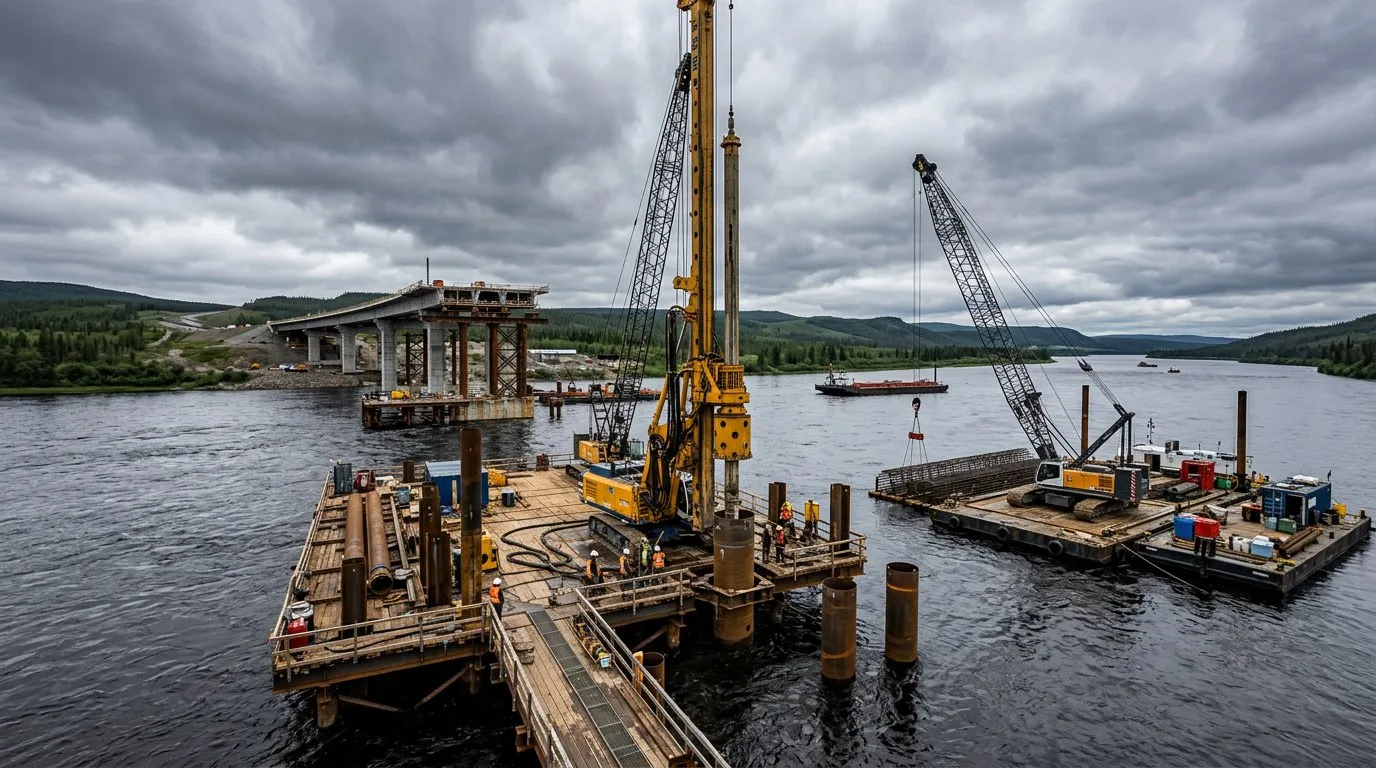
Rock-socketed piles — steady high flow at high pressure
DTH drilling and casing advance for bridge piles: large diameters and deep rock sockets need continuous high-flow, high-pressure air to clear the hole
Help me chooseTypical challenges
01
Large DTH or cluster hammers use so much air that a small unit can't keep up
02
Deep sockets with water in the hole: without enough pressure, cuttings stay and the bit jams
03
Casing through gravel and fill — an air interruption can collapse the hole or trap the casing
04
River and valley sites make moving and refuelling hard
What compressed air does here
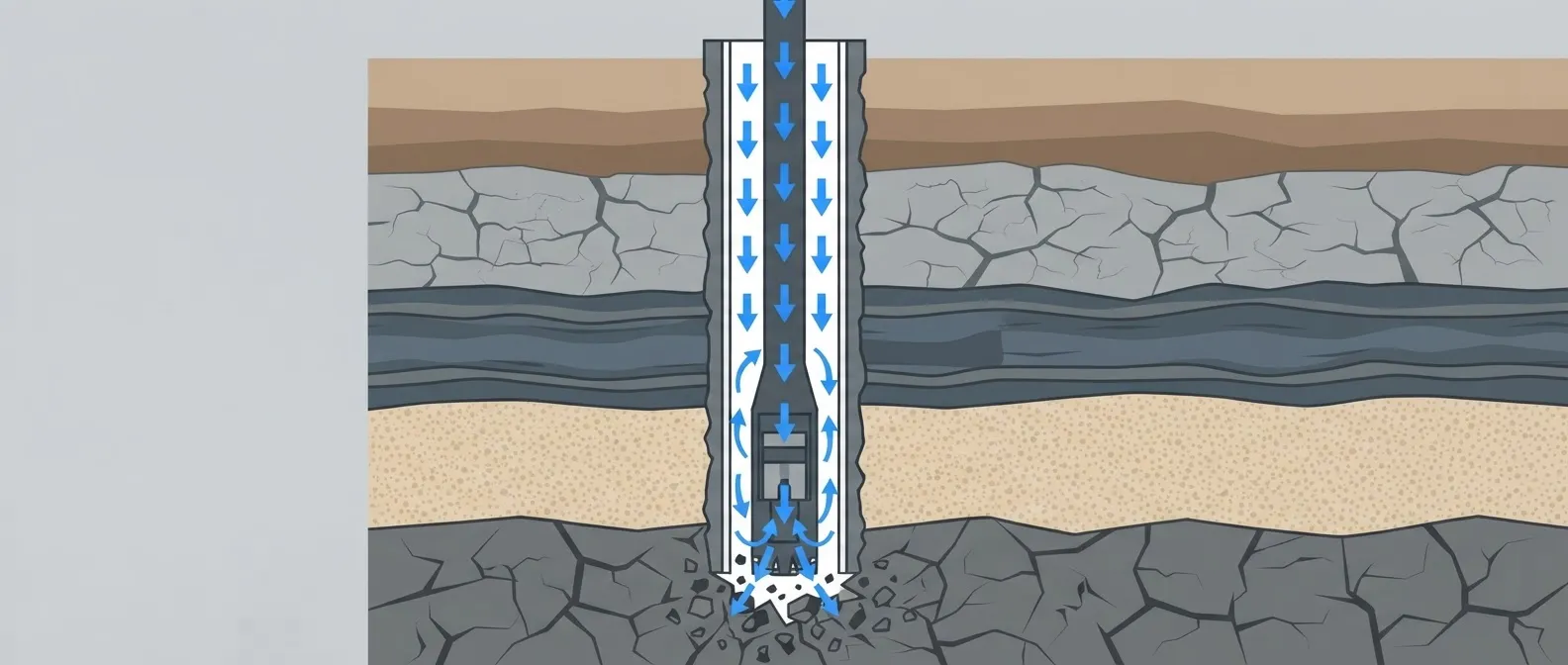
DTH drilling
Compressed air drives the hammer that breaks rock — the main power for the socket
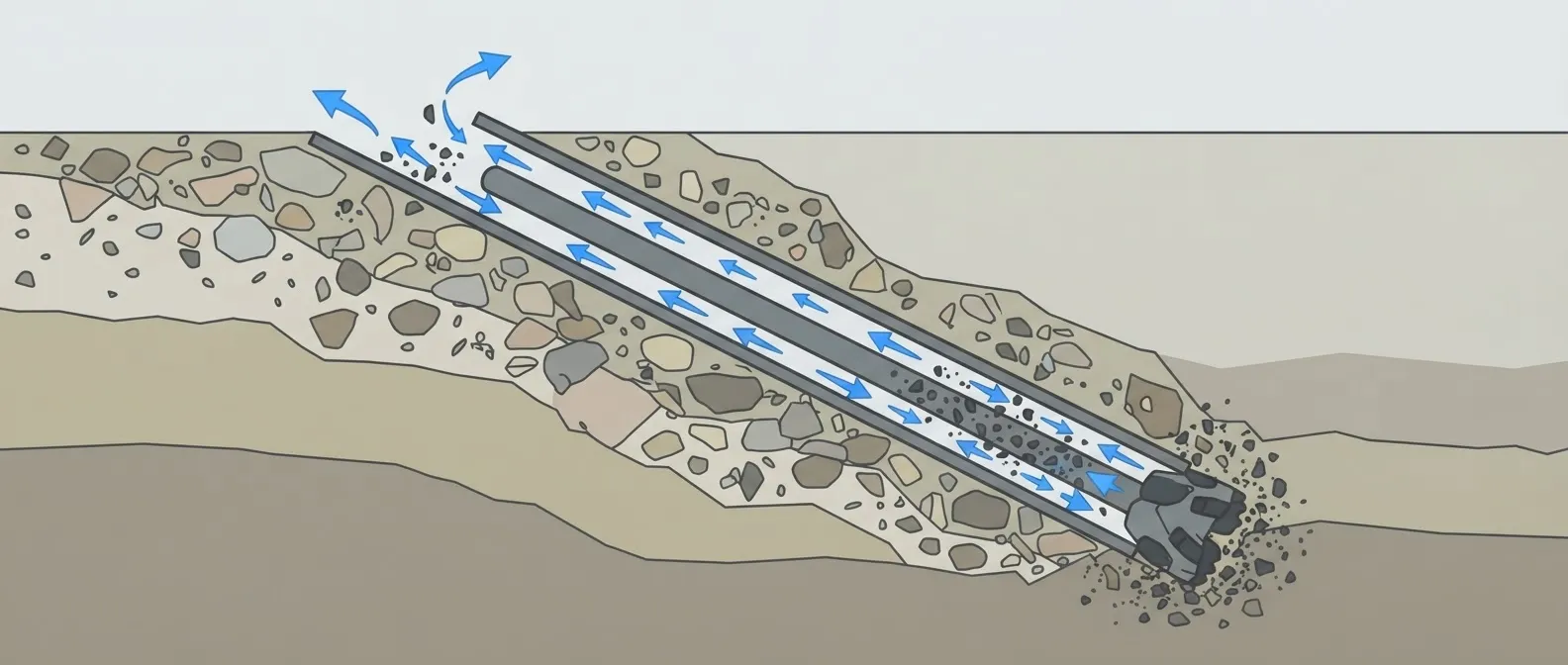
Casing advance
Casing follows the bit through overburden; continuous air keeps shoe and bit advancing together
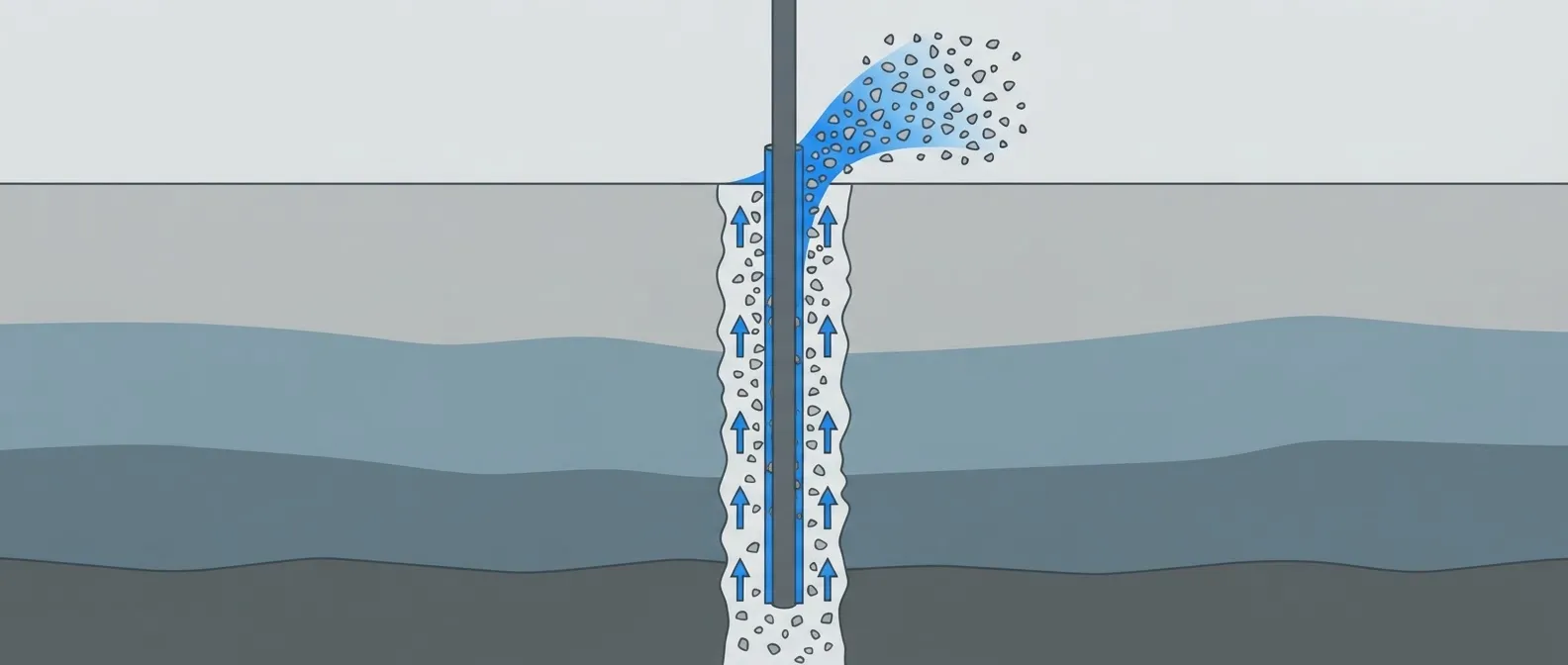
Flushing the hole
High-pressure air carries cuttings and water out, keeping the bottom clean
Recommended configuration
Typical hole size / depth / duty
Ø600–1500 mm, 3–15 m into rock, casing through overburden
Recommended pressure & air delivery
Single hammer 2.0–2.5 MPa, 25–35 m³/min; cluster hammers add up per hammer, several units in parallel
Recommended models
- CM400-31/25View model ›
- CM550-35/34-38/25KView model ›
- CM755-40/30-43/20KView model ›
Results
One high-capacity, high-pressure unit drives a large hammer, cutting the number of units; dual-duty models switch between casing and rock sections, covering a whole pile with one unit
Recommendations
- Cluster hammer air = air per hammer × number of hammers, plus about 15%
- With deep water in the hole, prioritise pressure — low pressure jams more often than low flow
- Don't cut the air during casing advance; pull up before unloading
Bridge piling — FAQ
Why DTH hammers instead of only rotary drilling?
+
In hard rock, boulders or deep sockets rotary drilling is slow; DTH hammers break rock efficiently and are often used together with rotary rigs for the rock section.
What size compressor does a cluster hammer need?
+
Air per hammer times the number of hammers — large cluster hammers often need over 60 m³/min, usually from two or more large units in parallel.
Can electric units be used at river crossings?
+
Where site power reaches the pier, yes — with lower running cost. On floating platforms or temporary sites, diesel is more flexible.
E-guide · Free download
KayDrill Portable Compressor Selection Guide V3
Free download ›Complex application? Talk to an engineer
Contact an engineer