
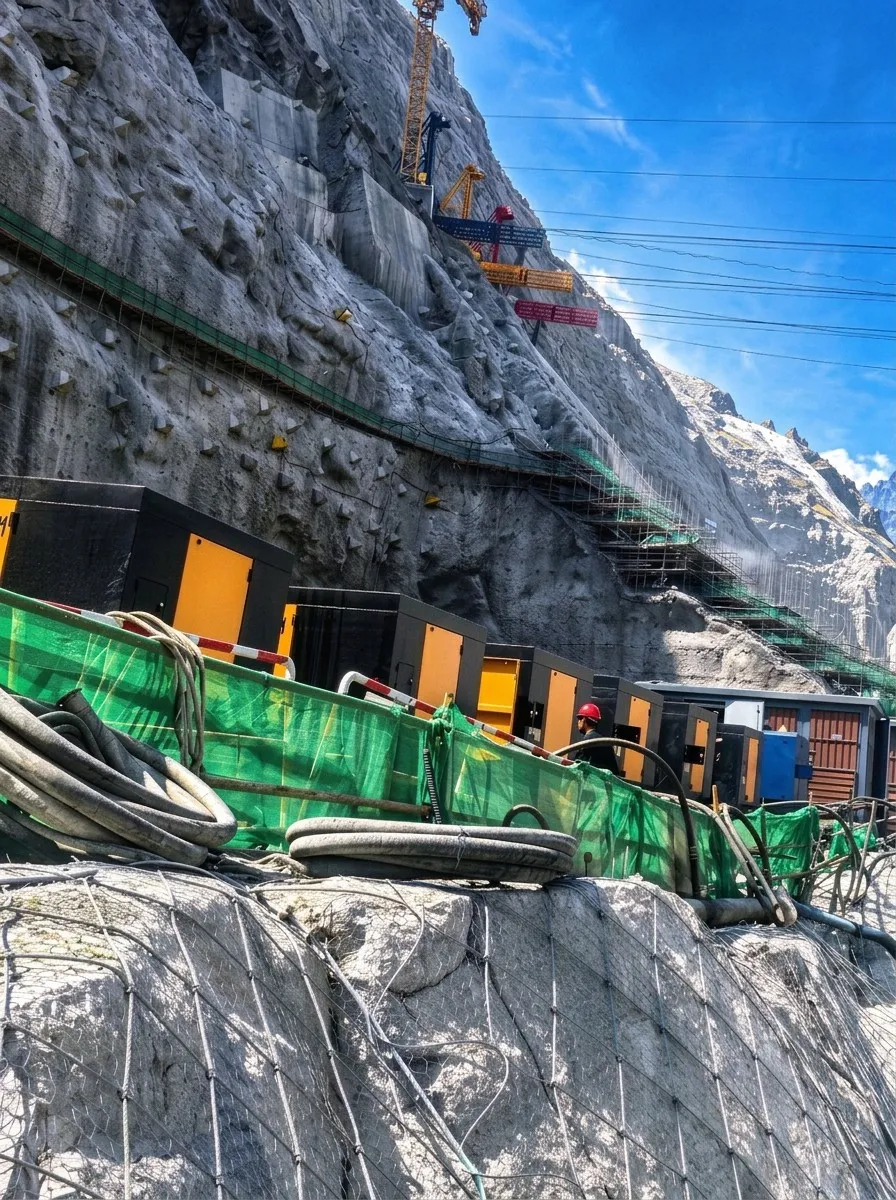
Dam foundations and caverns — steady pressure at every face
Foundation treatment and underground works at large hydropower projects often run several units in parallel, grouped by pressure for anchoring, grouting and hole cleaning
Help me chooseTypical challenges
01
Several faces draw air at once; demand peaks beyond one unit
02
Anchoring, grouting and hole cleaning need very different pressures
03
Remote sites make diesel expensive and supply uncertain
04
Diesel exhaust adds to ventilation load in caverns
What compressed air does here
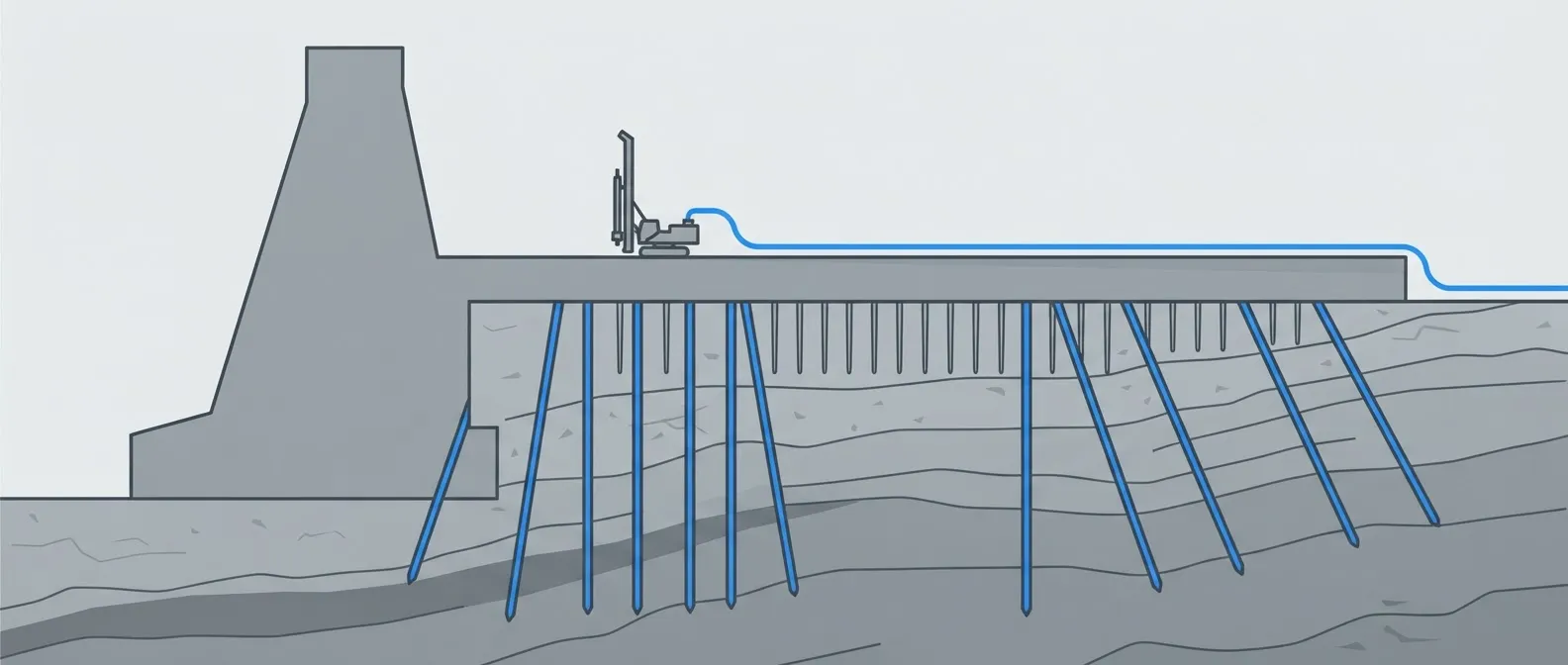
Drilling anchor holes
High-pressure air drives DTH hammers for anchor and consolidation-grouting holes
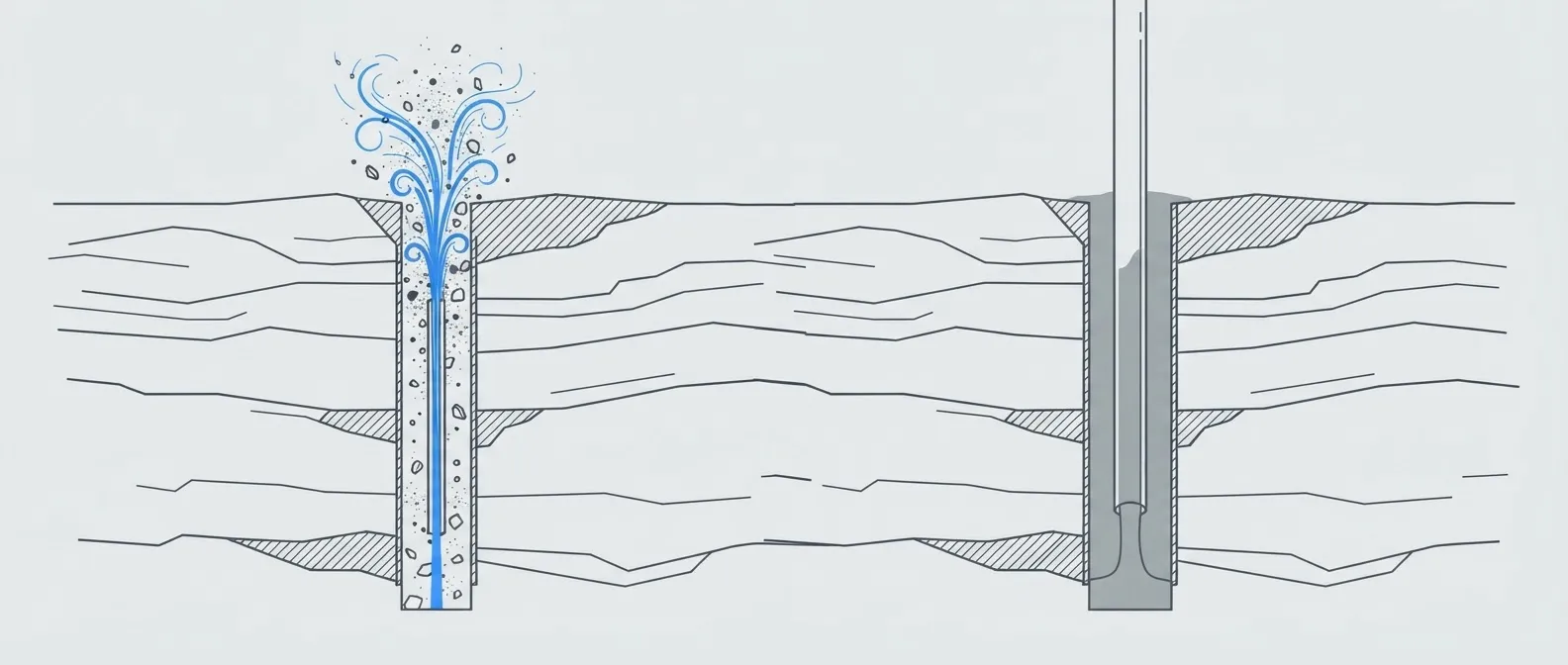
Grouting and hole cleaning
Medium-pressure air for grouting, blowing out holes and other auxiliary work
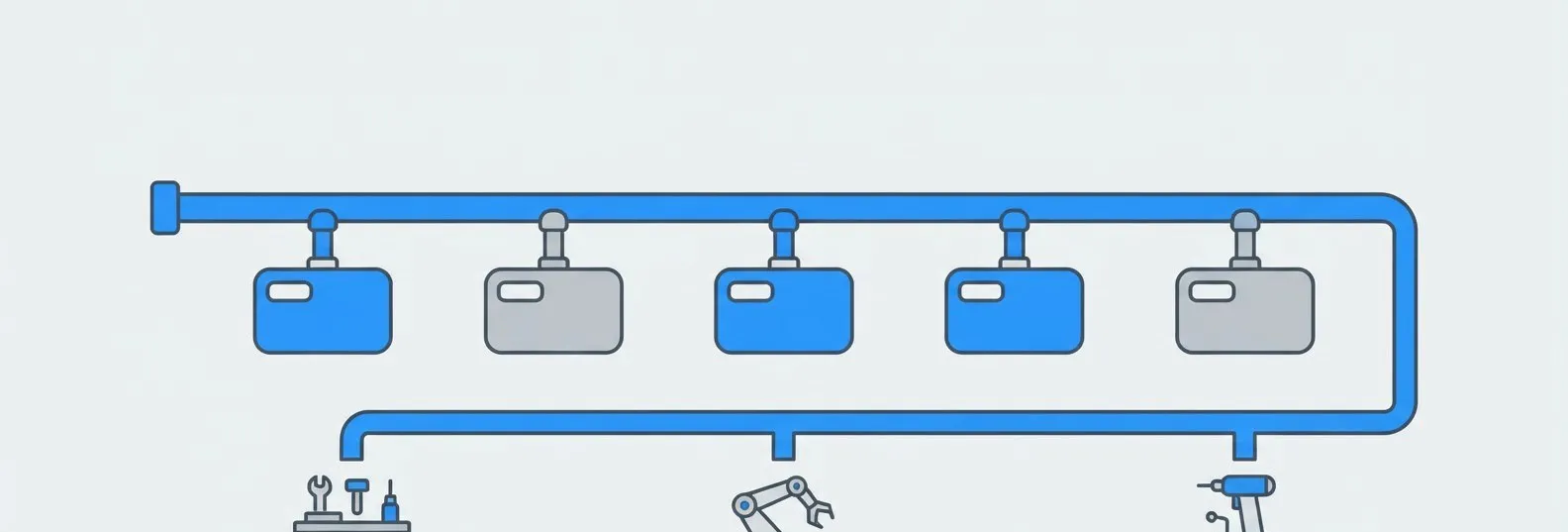
Running units in parallel
Start and stop units with the demand at each face so none run at low load
Recommended configuration
Typical hole size / depth / duty
Depends on anchor and grouting hole depth
Recommended pressure & air delivery
Grouped by pressure: 18–24 bar for grouting and cleaning, above 25 bar for anchor drilling
Recommended models
- DM250-31/25View model ›
- DM185-26/21View model ›
- DM138-23/19View model ›
Results
Electric motors keep full output at altitude, with none of the diesel derating; units placed near each face cut long-hose pressure losses (from several large hydropower projects)
Related case studies
Electric air for foundation grouting and anchoring at a large hydropower project in southwest China
With site power available, M Series electric portable units were chosen: the DM250-31/25 (31 m³/min @ 25 bar) for high-pressure anchor drilling and DM185 units for medium-pressure grouting and hole cleaning. Motor output is unaffected by altitude and no fuel is needed.
DM250-31/25, DM185 series
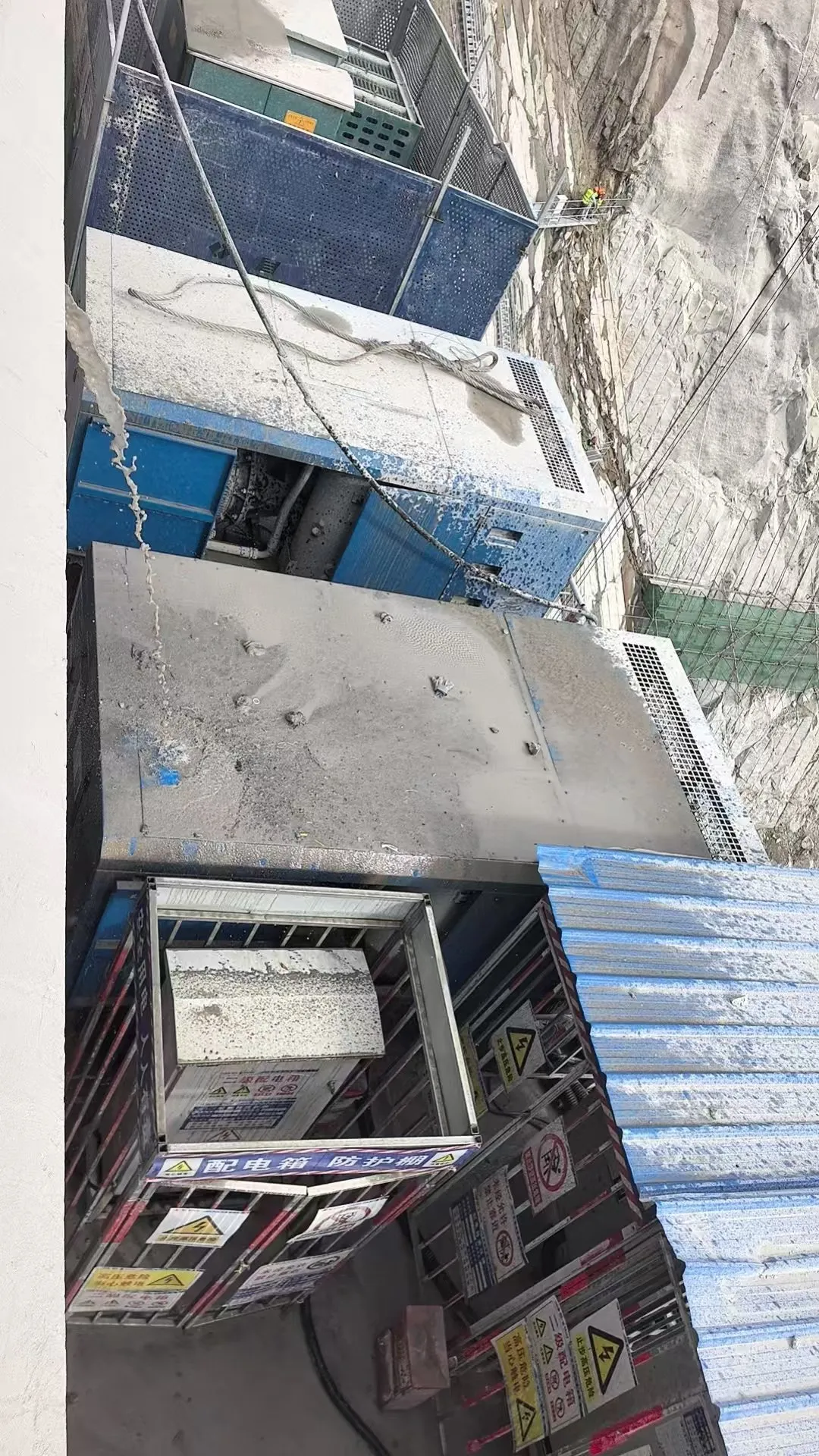
Electric units in parallel for steady air in a large hydropower project's underground works
132 kW and 185 kW electric units run in parallel with common receivers and pressure control. The DM185-26/21 runs continuously for base load and the DM138-23/19 starts and stops as faces open and close, so no unit runs at low load for long — and there is no diesel exhaust underground.
DM138-23/19, DM185-26/21
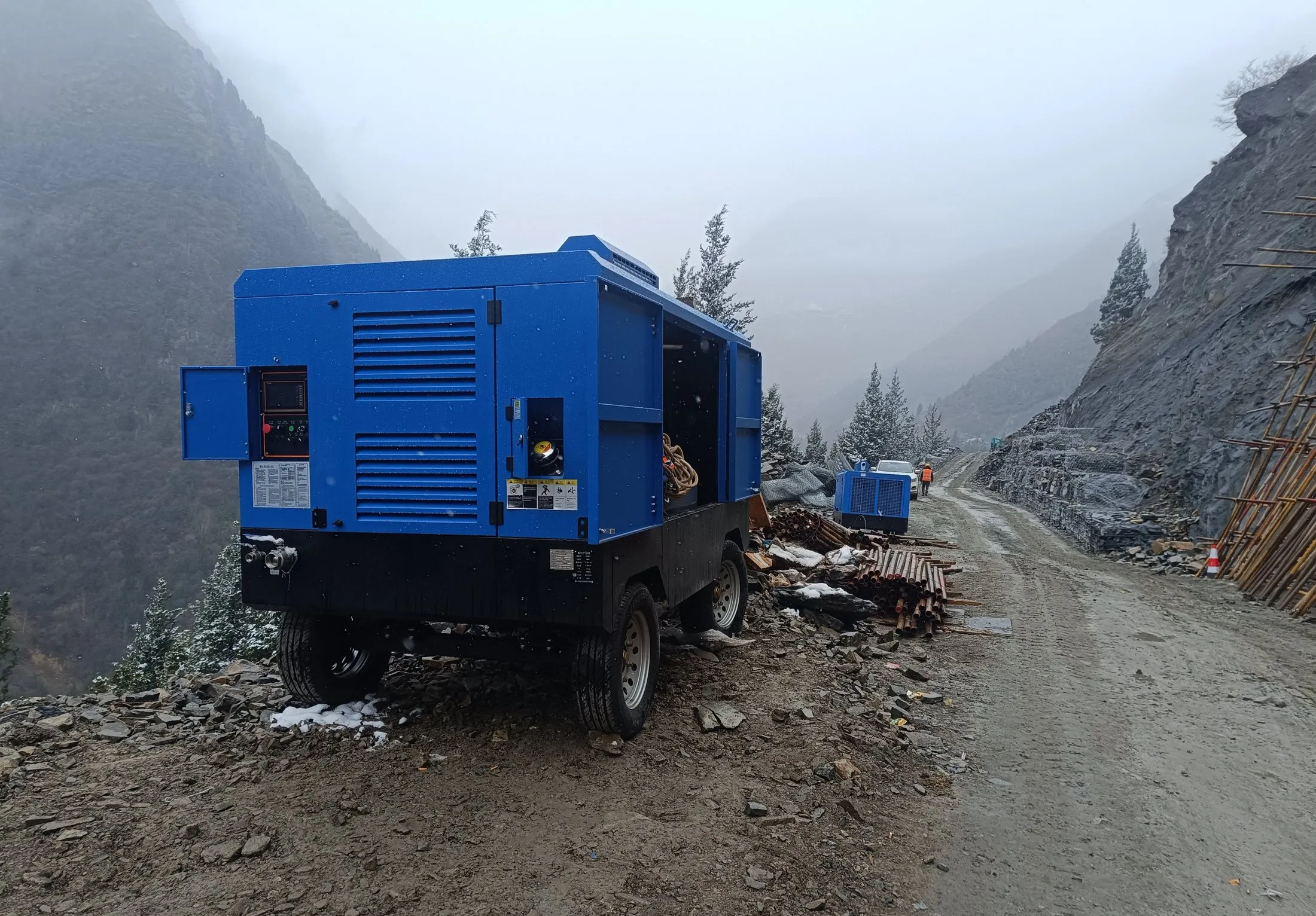
Electric units at three pressures, matched to each process at a large hydropower project
Electric units in three pressure steps: the DM185-23/24 (24 bar) for deep, high-pressure drilling, the DM185-26/21 for standard drilling and the DM138-23/19 for medium-pressure grouting and hole cleaning. All are M Series electric units with the same operation and maintenance.
DM185-23/24, DM185-26/21, DM138-23/19
Recommendations
- Where site power is available, choose electric units — no altitude derating
- Group units by process pressure; avoid running high-pressure units throttled
- Use common receivers and pressure control for parallel units
Foundation drilling — FAQ
Why several units instead of one big one?
+
Processes need very different pressures. Several medium units grouped by pressure use less energy than one big unit throttled down, and can be placed near each face.
Electric or diesel at high altitude?
+
With stable power, electric — motors don't lose power at altitude the way diesel engines do.
What matters when running units in parallel?
+
Use common receivers and pressure control, and start or stop units with the demand at each face so none run at low load for long.