Through desert wind and sand — pile drilling keeps moving
Solar mounting piles mean many holes and constant moves, usually without grid power; sand and big temperature swings test filters and protection
Help me chooseTypical challenges
01
Many shallow, scattered holes — the unit follows the rig constantly
02
No grid on site — diesel only
03
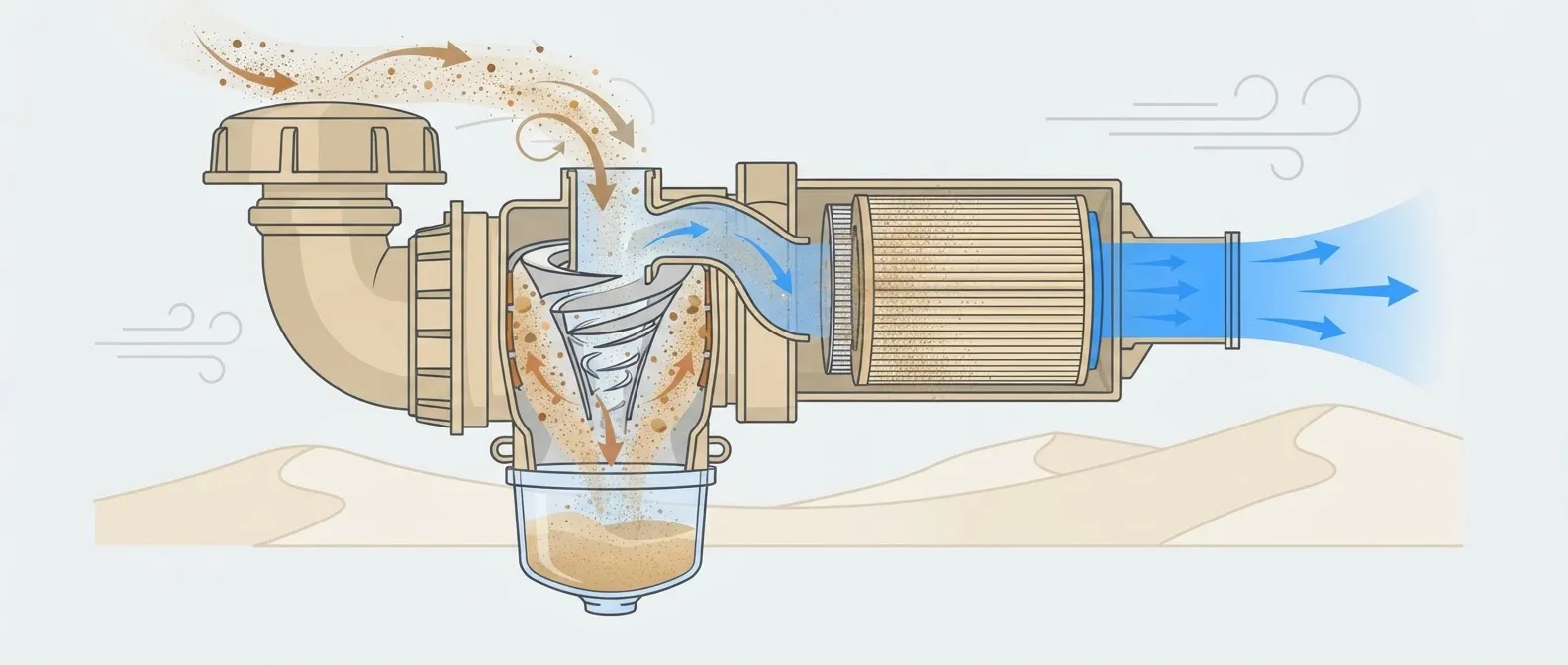
Wind and dust: blocked filters are the main cause of stops
04
Large day-night temperature swings challenge cooling and corrosion protection
What compressed air does here
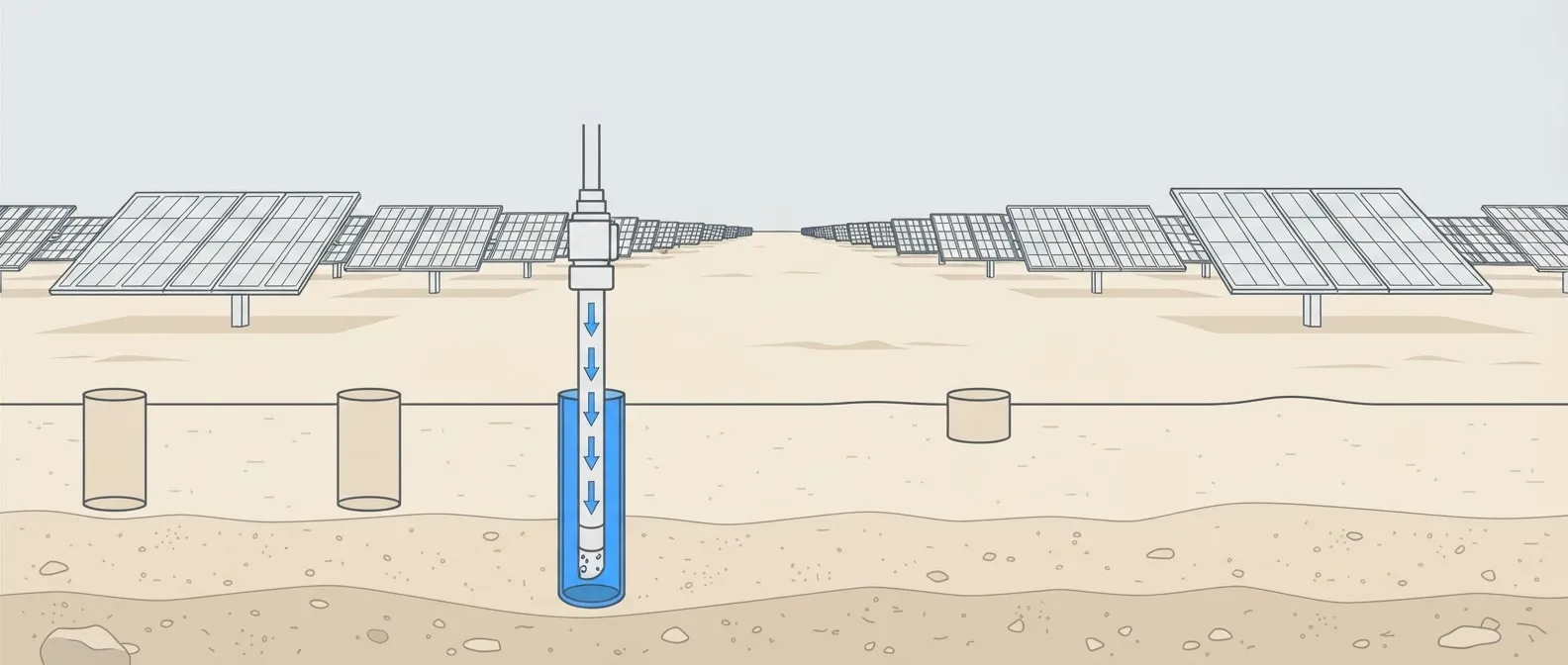
Driving the pile rig
Compressed air powers the DTH hammer for shallow pile holes
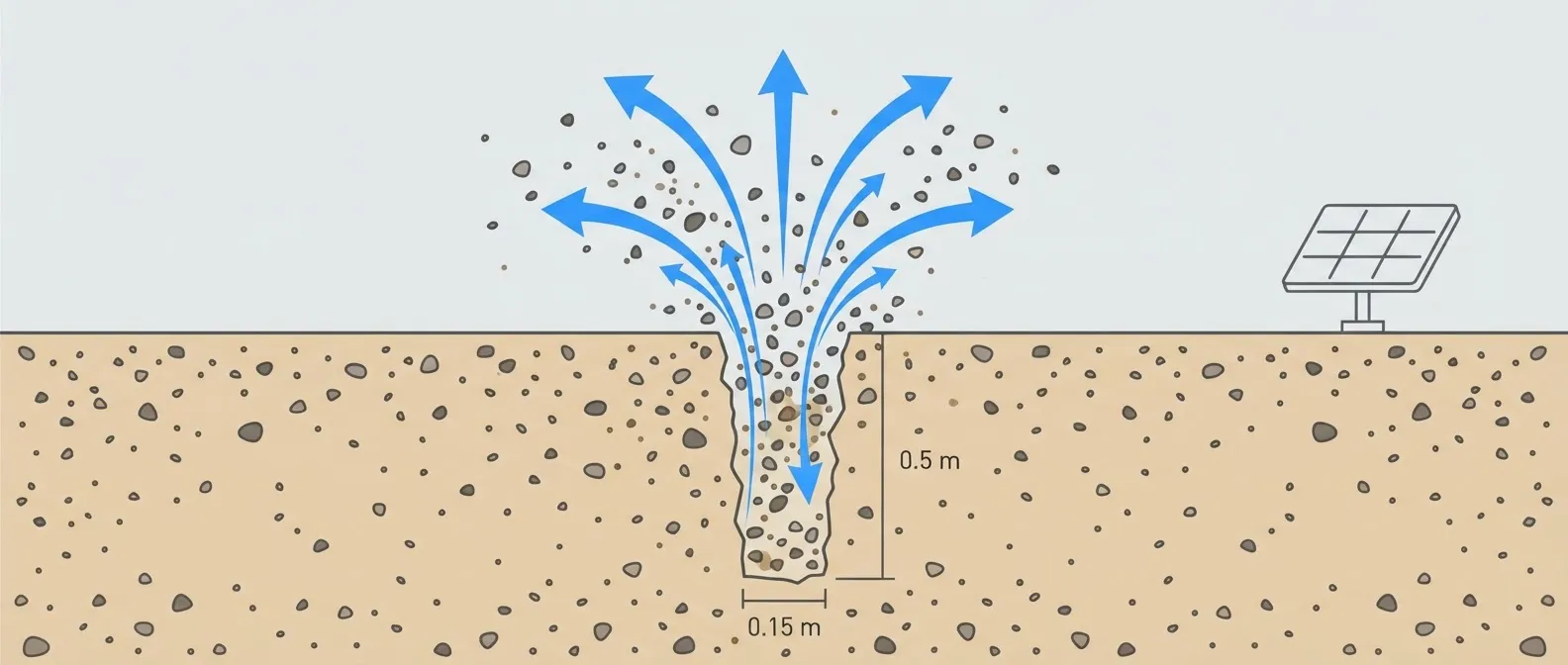
Clearing cuttings
Air carries cuttings out of the hole for continuous drilling
Continuous supply
Steady pressure as the unit moves hole to hole, without filter-related stops
Recommended configuration
Typical hole size / depth / duty
Usually 2–6 m per hole
Recommended pressure & air delivery
LG two-stage diesel, 22 m³/min @ 19 bar, with the heavy-duty desert air-filter kit
Recommended models
- LGCY260-22/19View model ›
Results
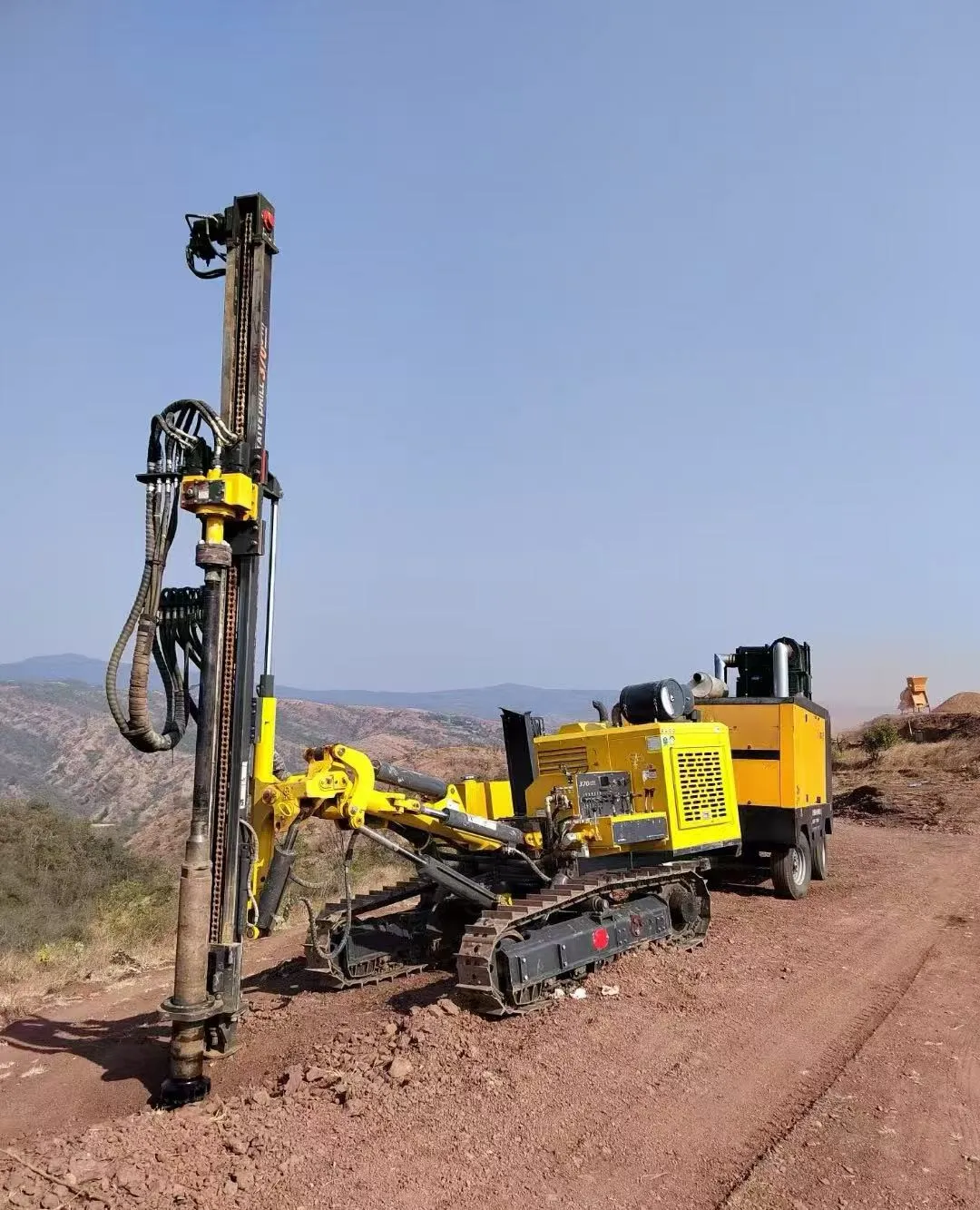
The unit followed the rig hole to hole, breathed normally in sandstorms, and pile drilling kept moving (from a solar project in northwest China)
Recommendations
- The desert filter kit extends filter life in heavy dust
- Heavy-duty chassis, hard-wearing tyres and drawbar for moves over gravel plains
- Wear parts grouped for on-site filter changes; parking brake standard for slopes
Solar pile drilling — FAQ
Which series for solar piling?
+
For large fleets and conventional duty the LG Series offers better value; choose the M Series if you need higher pressure.
How often should filters be changed in desert wind?
+
Fit the desert filter kit and shorten the inspection interval to suit the dust; follow the maintenance manual.
What if there is no grid on site?
+
Choose a diesel unit, available with Cummins or Yuchai power.