
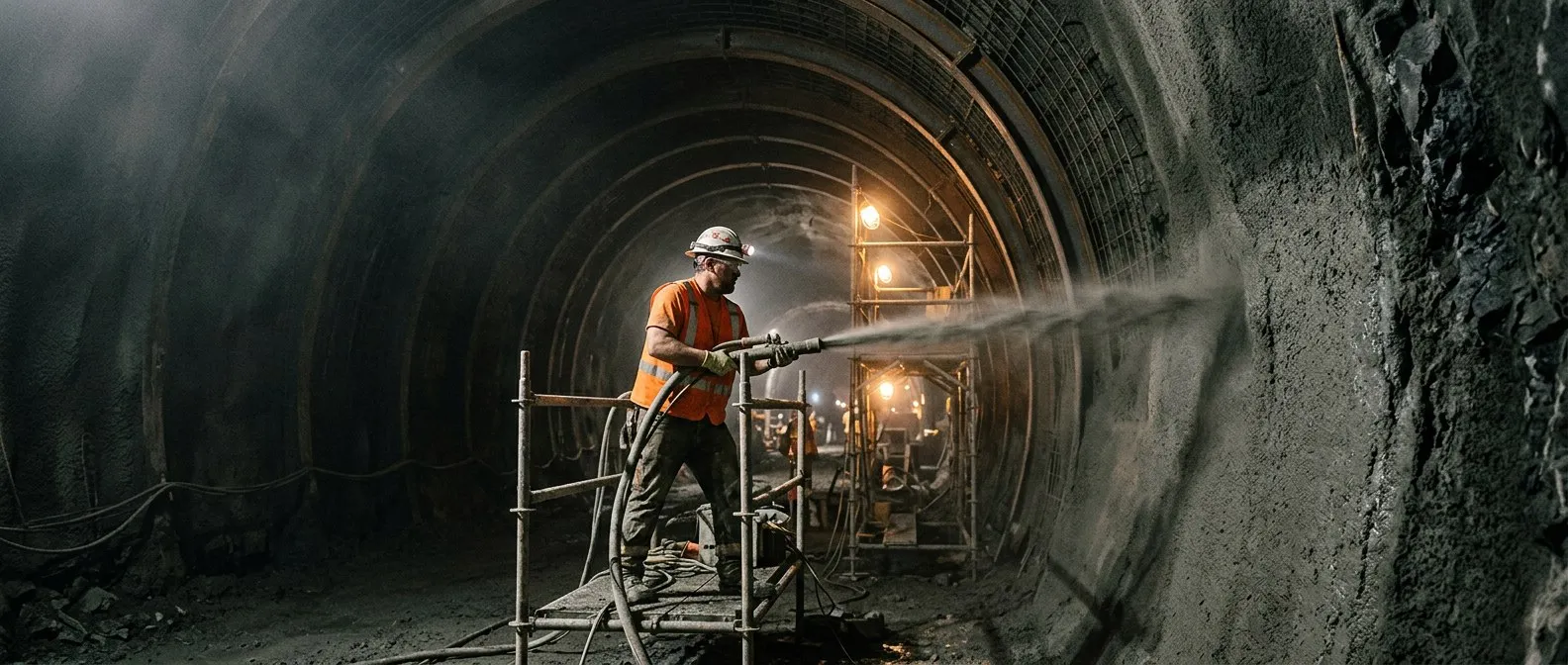
Shotcrete without pressure drops — low pressure, high flow, precisely matched
Shotcrete uses a lot of air at modest pressure — a classic low-pressure, high-flow duty where a matched unit saves power over a throttled high-pressure one
Help me chooseTypical challenges
01
Lots of air but low pressure — easy to end up with an oversized high-pressure unit
02
Spraying rhythm varies; fixed-speed units waste power
03
Strict noise limits in tunnels and on slopes
04
Pressure swings increase rebound
What compressed air does here
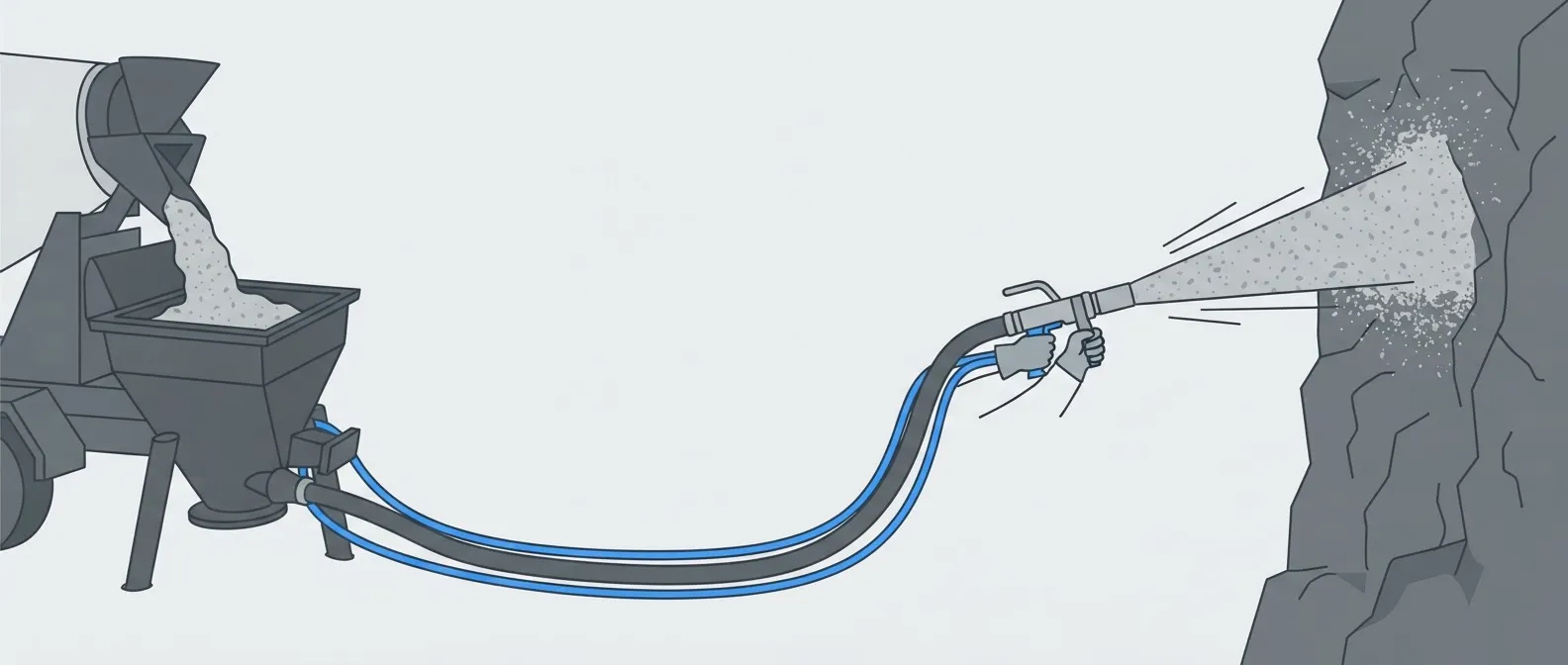
Driving the sprayer
Continuous air for shotcrete equipment keeps the spray dense
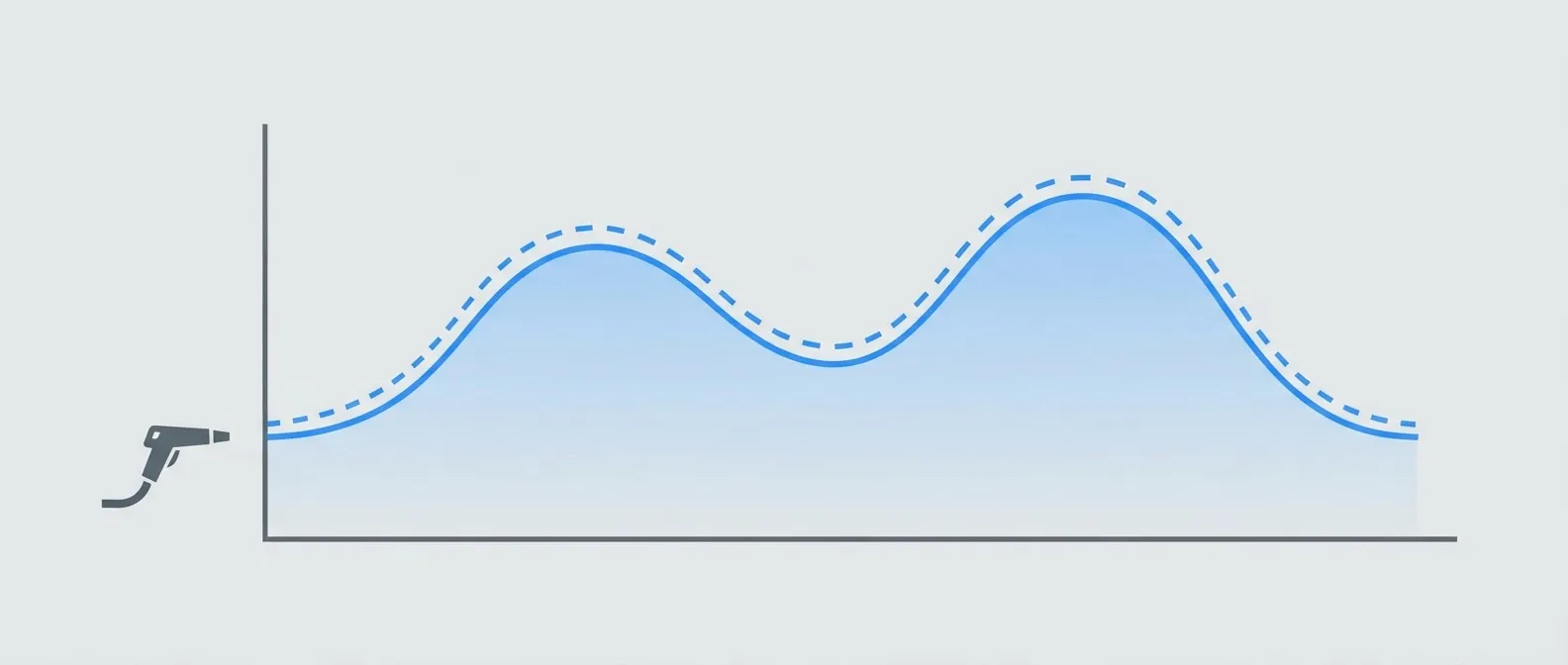
Following the work
A VSD adjusts air flow to the spraying rhythm and avoids idle running
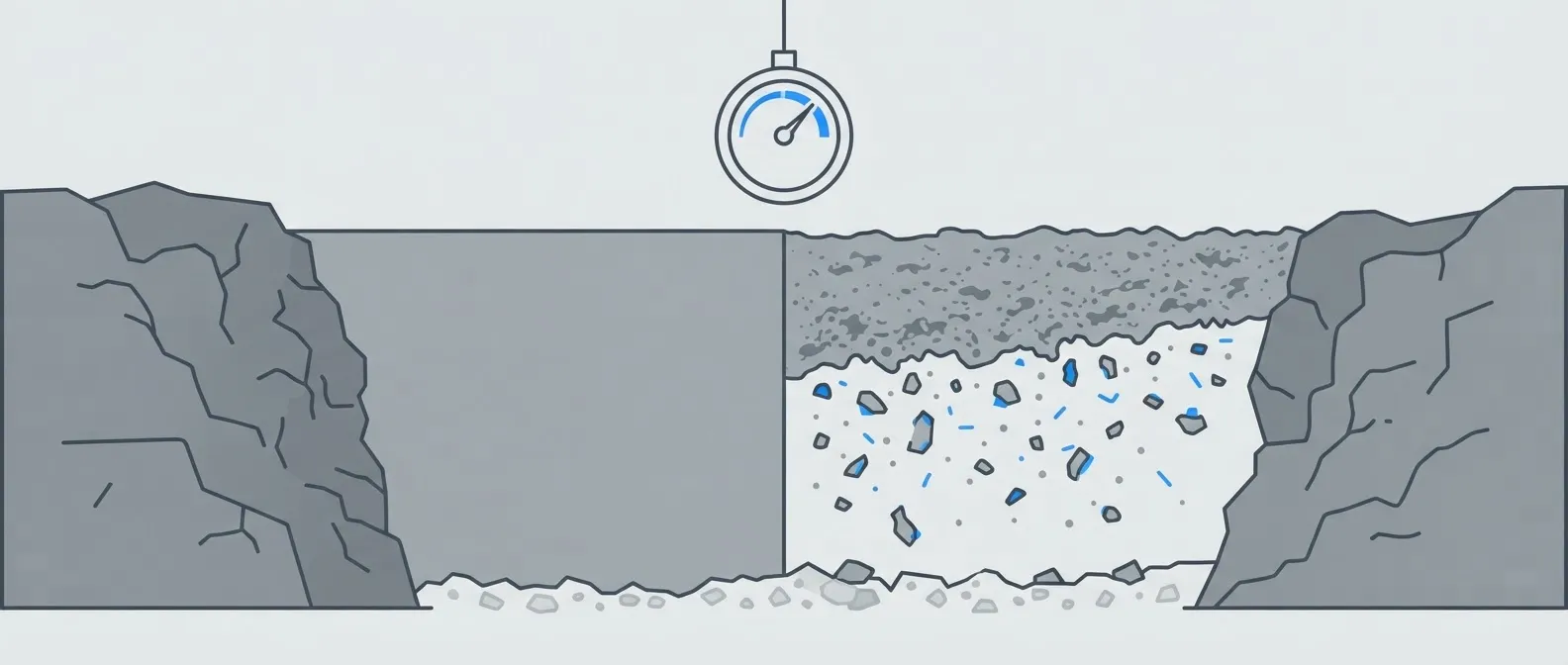
Steady pressure
Stable pressure directly affects density and rebound
Recommended configuration
Typical hole size / depth / duty
Depends on equipment and working face
Recommended pressure & air delivery
Low pressure, high flow: 7–8 bar, 40–56 m³/min typical
Recommended models
- DMT220-45/7View model ›
Results
Much lower energy per cubic metre than a throttled high-pressure unit; steadier pressure and less rebound (from a highway tunnel project in western China)
Recommendations
- Size to the sprayer's real pressure — don't throttle a high-pressure unit
- Have VSD-trained technicians service the drive
- Coordinate with ventilation in tunnels and enclosed spaces
Shotcrete — FAQ
Why not just use a high-pressure unit?
+
Shotcrete is a low-pressure, high-flow duty; running a high-pressure unit at reduced pressure wastes energy. Sizing to the real pressure saves power.
Can the same unit drill and spray?
+
Not entirely. Drilling usually needs medium-high pressure for the hammer, while shotcrete needs low pressure and high flow — size them separately.
What does a VSD bring to shotcrete?
+
It adjusts air flow to the spraying rhythm, avoids idle running at low demand and keeps pressure steadier.