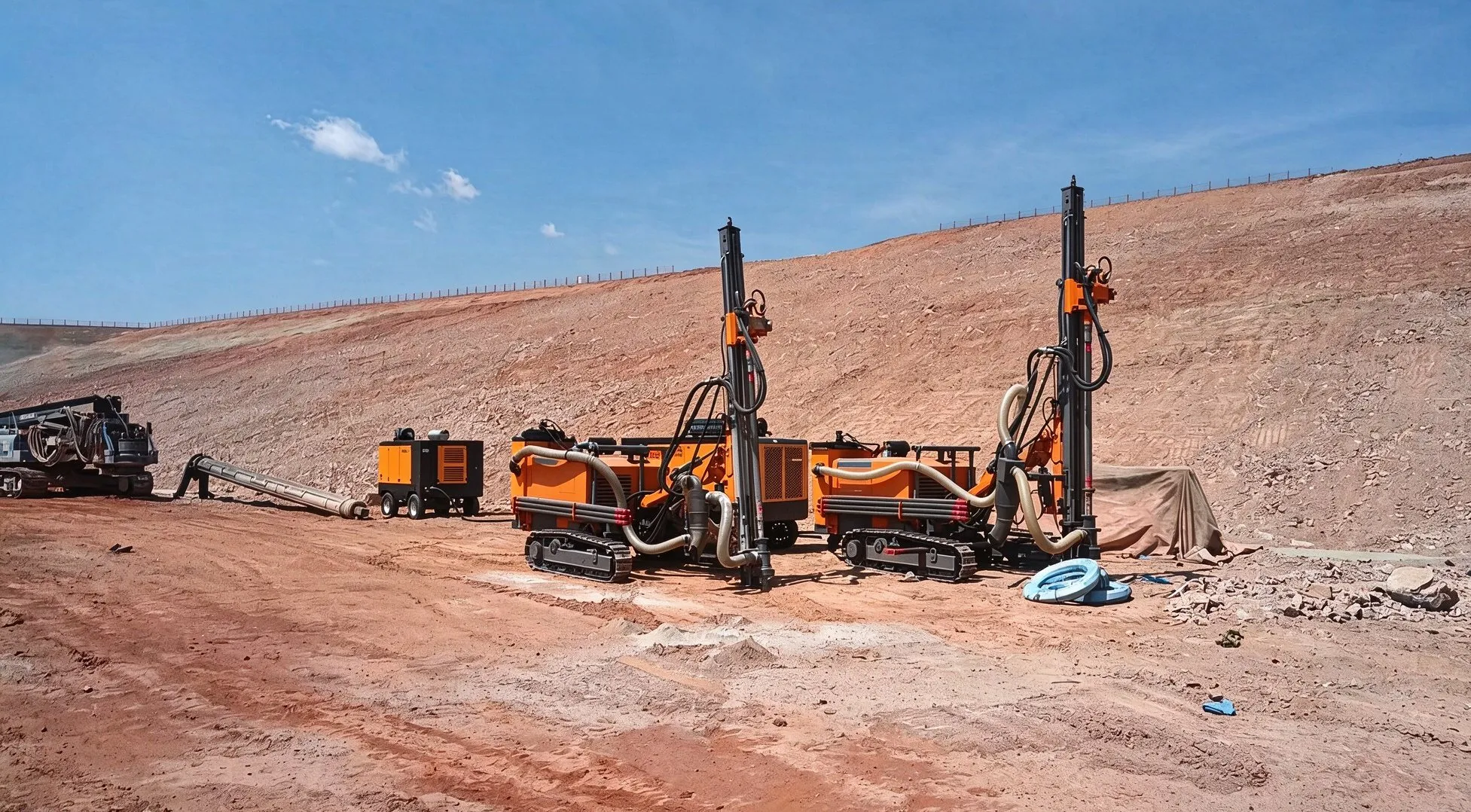
Long hoses, big height differences — full pressure in every anchor hole
High-speed-rail cut slopes need deep anchor holes, often with casing through broken ground; the compressor sits at the toe, so hoses are long and losses high
Help me chooseTypical challenges
01
Anchor holes of 20–40 m need high effective pressure at the bit
02
Unit at the toe of the slope: long hoses, big height difference, real pressure loss
03
Broken ground collapses — casing drilling uses a lot of air
04
Several rigs on the slope at once need steady supply
What compressed air does here
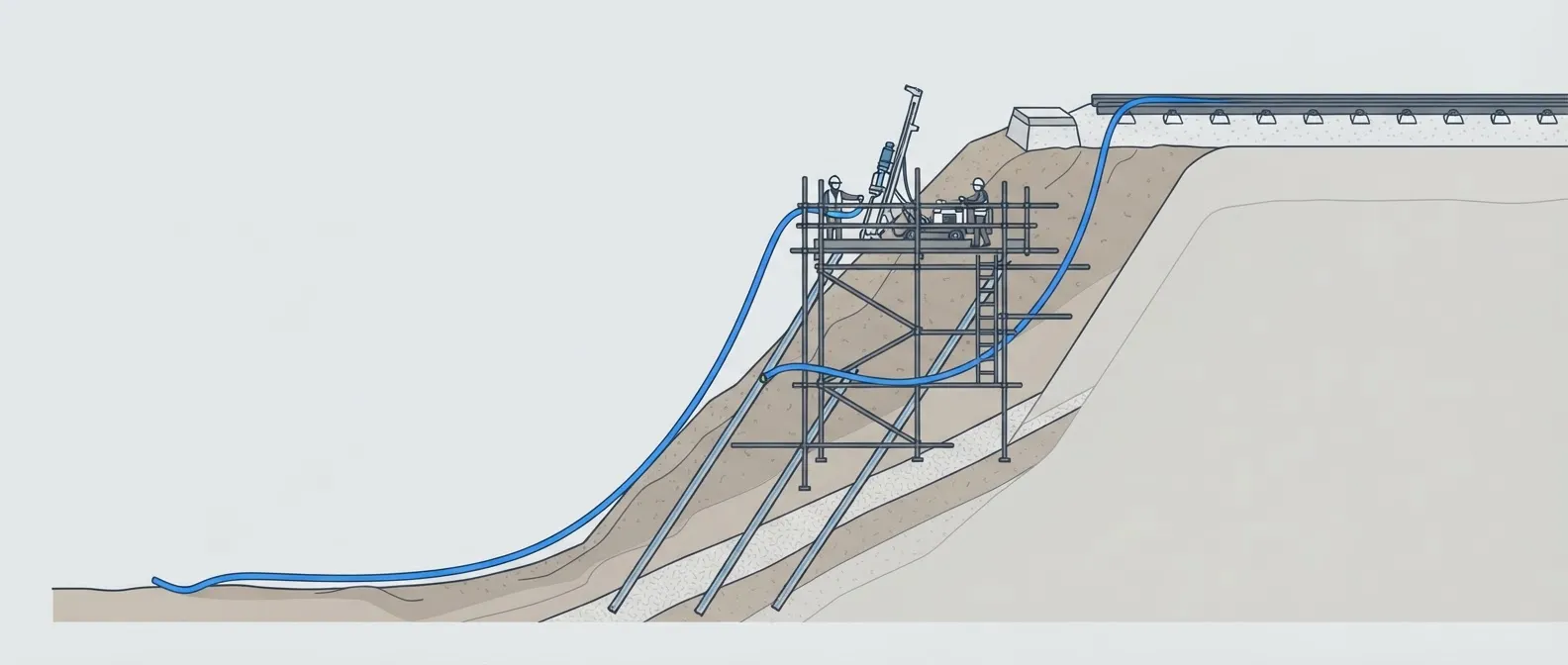
Drilling anchor holes
High-pressure air drives DTH hammers for bolts and cable anchors
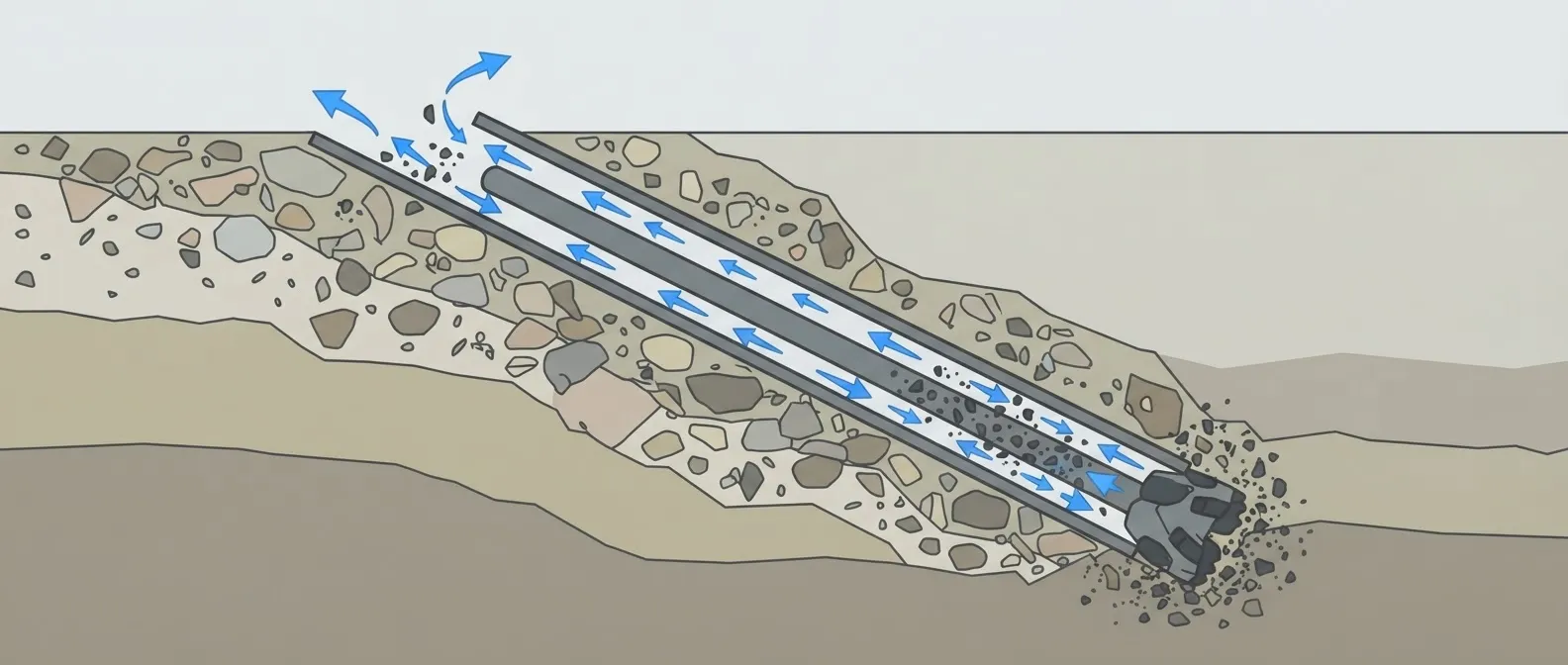
Casing and flushing
Broken ground needs casing; too little air makes flushing difficult
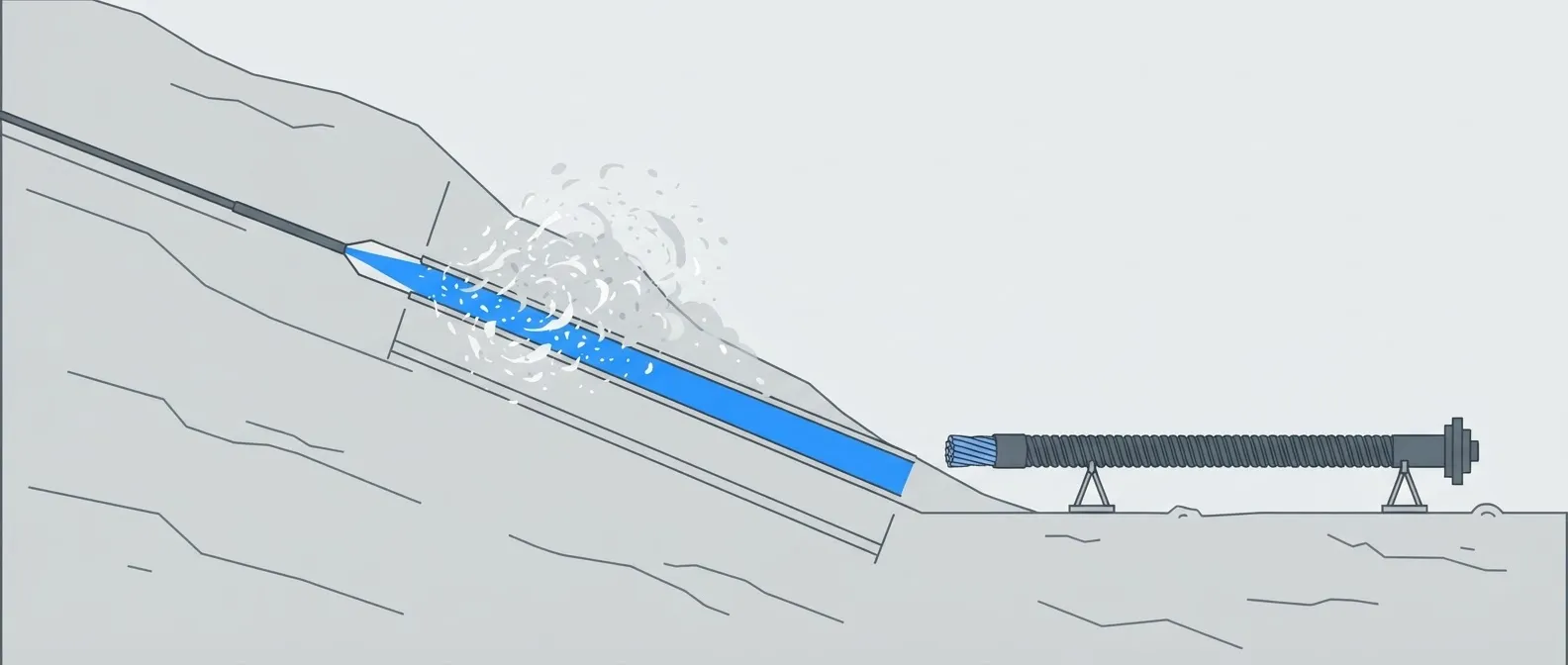
Hole cleaning
High-flow cleaning after drilling ensures anchor quality
Recommended configuration
Typical hole size / depth / duty
Anchor holes 20–40 m
Recommended pressure & air delivery
Dual-duty diesel: 31 m³/min @ 25 bar for long hoses, 33 m³/min @ 18 bar for hole cleaning
Recommended models
- CM400-31/25-33/18View model ›
Results
Steady supply with several rigs on the slope, smooth casing sections and anchoring on schedule (from a high-speed railway project in western China)
Recommendations
- Allow extra air for hose length and casing
- One switch between high pressure and high flow covers different steps
- High-strength chassis and heavy-duty drawbar for mountain tracks; generous cooling for summer heat
Slope anchoring — FAQ
Why a dual-duty unit for slope anchoring?
+
Long hoses and big height differences need the high-pressure setting at the bit, while hole cleaning needs high flow — one switch covers both.
How do I account for long hoses?
+
Calculate from hose length, height difference and casing, and allow margin on pressure and flow.
Can an engineer do the calculation?
+
Yes — leave a message on the Contact page and our engineers will get back to you.