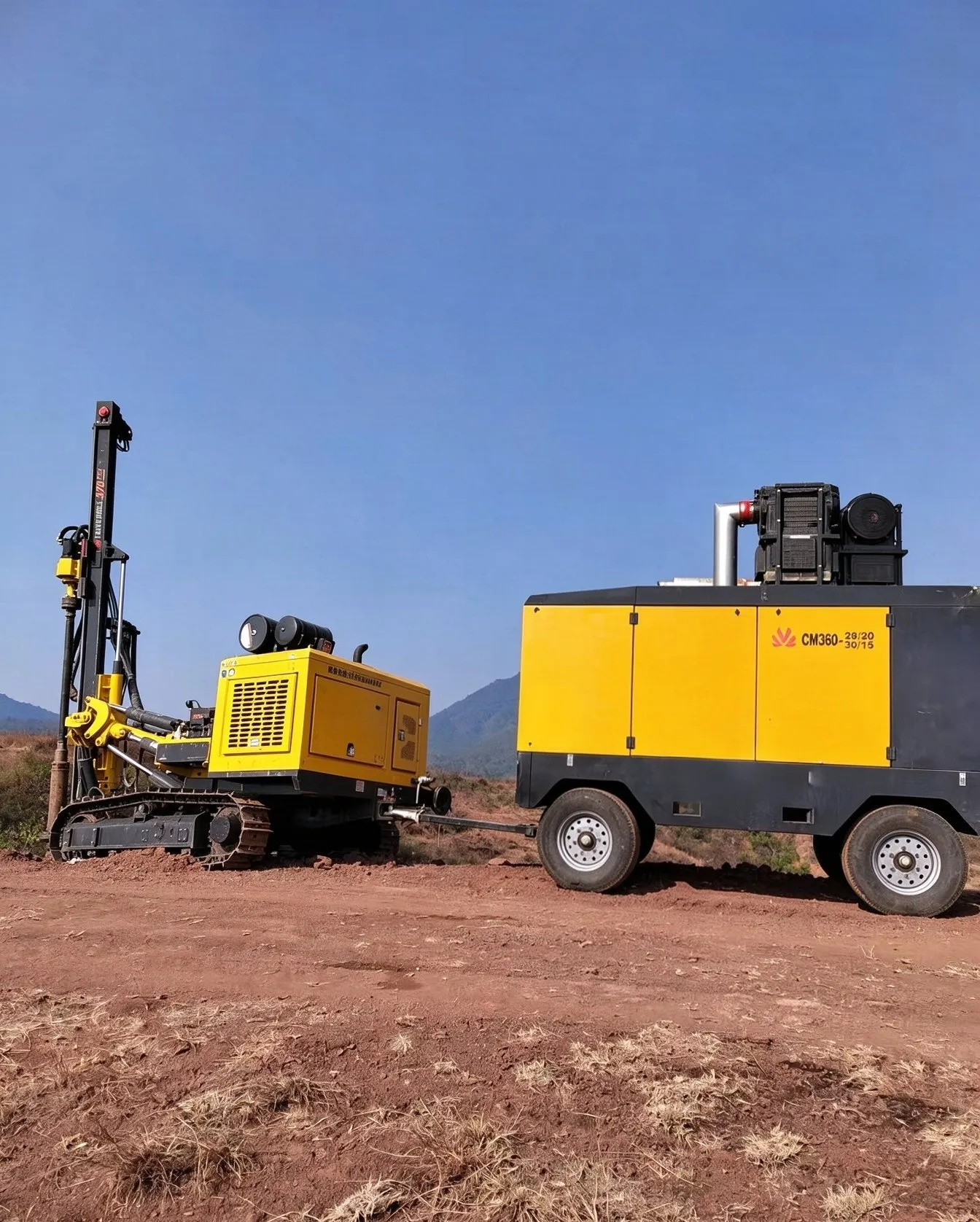
Deep wells, steady water — confidence in every metre
Wells of 150–250 m through sandstone and weathered zones: dual-duty units cover high-pressure deep drilling and high-flow well development
Help me chooseTypical challenges
01
Not enough pressure at depth; cuttings hard to lift once water comes in
02
Frequent moves demand mobility and reliability
03
Sandstone and weathered layers; water inflow varies widely
04
Wells in scattered villages reached over unpaved roads
What compressed air does here
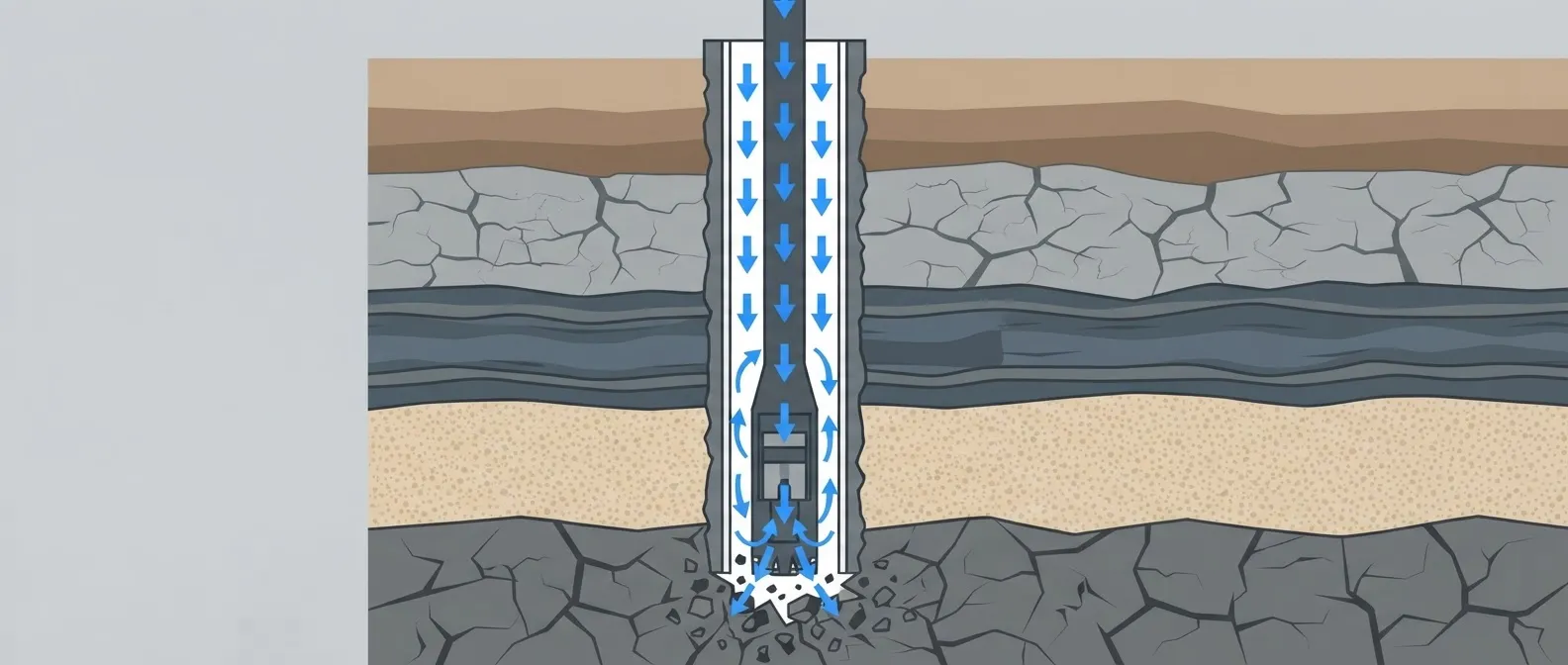
Driving the hammer
Compressed air drives the DTH hammer that breaks the rock — the core of drilling power
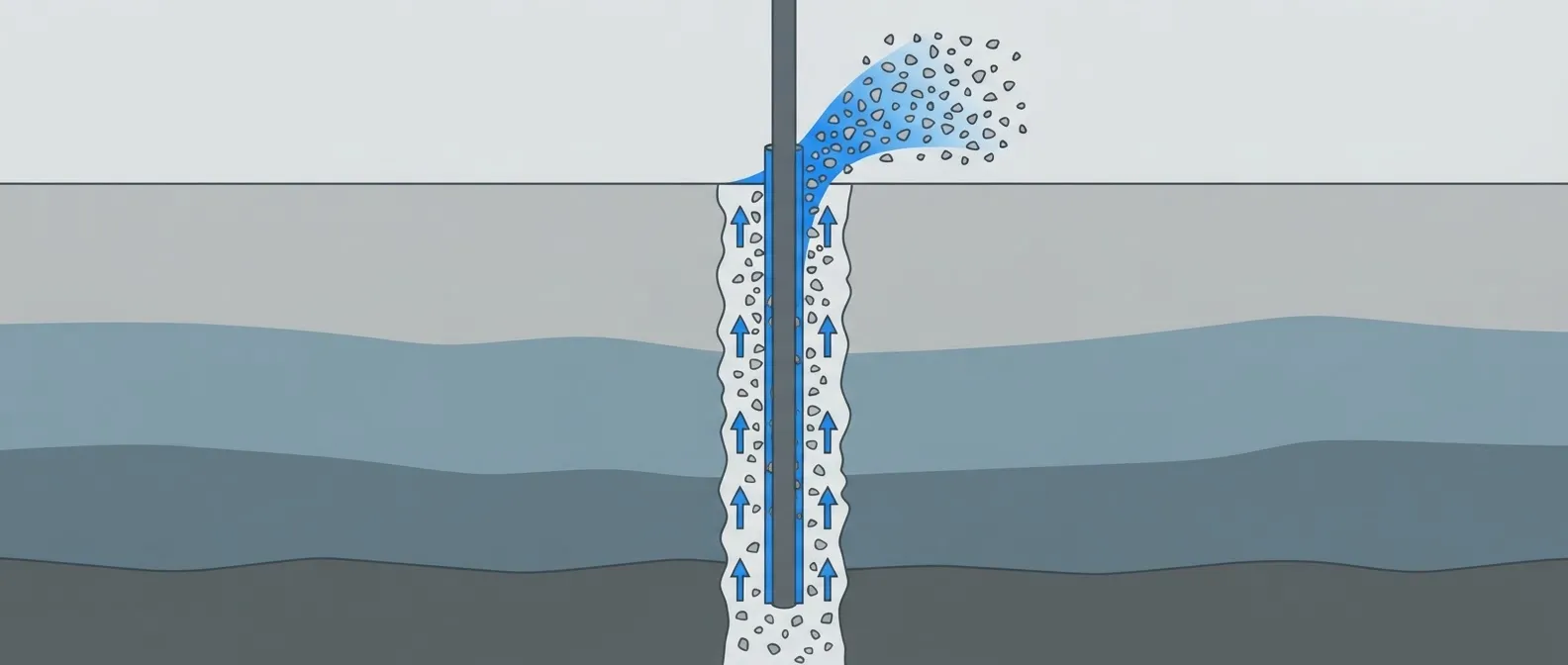
Clearing cuttings
Air carries cuttings up the annulus and out of the hole; too little velocity buries the bit
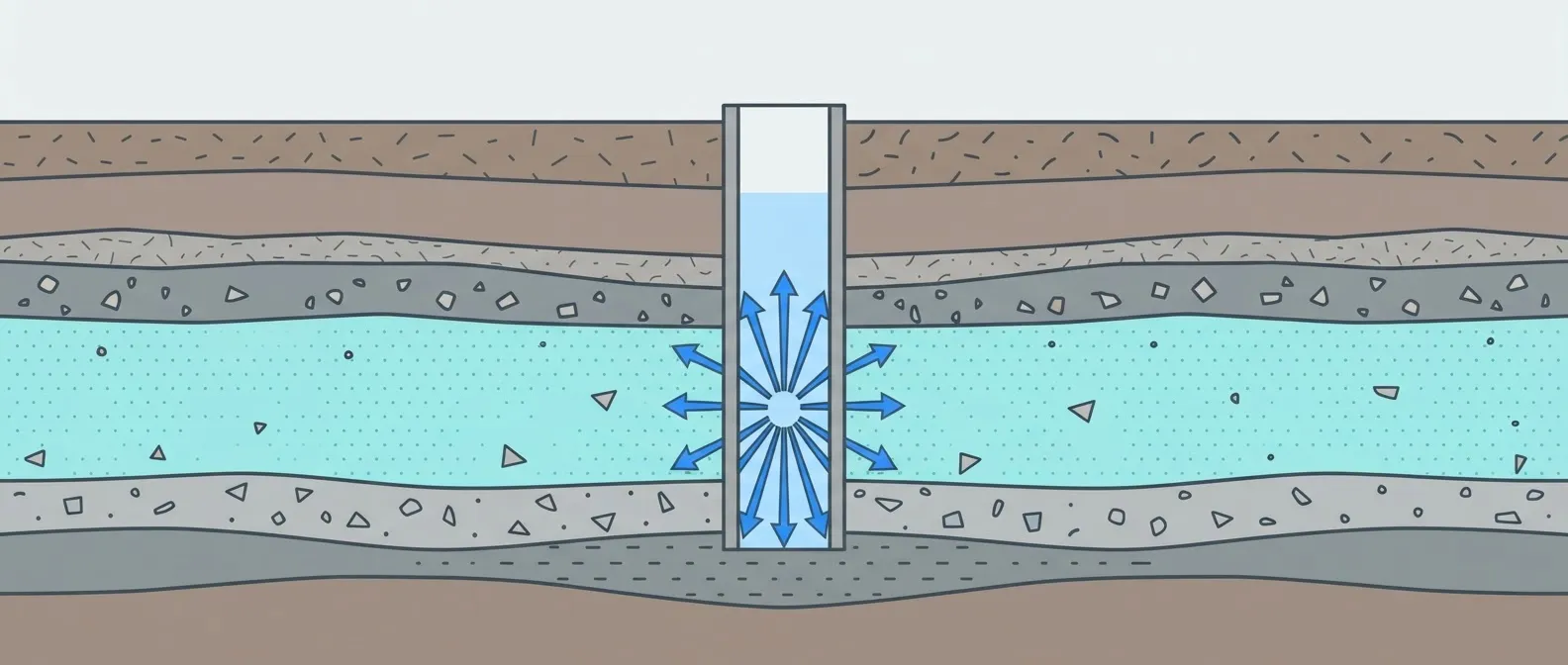
Holding the hole
Air pressure in the water-bearing section helps prevent collapse and water inrush
Recommended configuration
Typical hole size / depth / duty
150–250 m
Recommended pressure & air delivery
Deep section 21 m³/min @ 21 bar · development 23 m³/min @ 15 bar (one-switch dual duty)
Recommended models
- CM260-21/21-23/15View model ›
- CM220-20/18-22/15View model ›
Results
One unit covers the whole well, so moves are faster and wells are finished sooner (figures to be confirmed on site)
Recommendations
- Match the DTH hammer to the hole size (Ø90–Ø203)
- Heavy-duty chassis and hard-wearing tyres for frequent moves on rural roads
- Service parts grouped together for easy on-site maintenance
Water well drilling — FAQ
What air flow do I need for water wells?
+
Work it out from hole size and depth — larger and deeper holes need more air. Dual-duty units cover both deep high-pressure drilling and high-flow development; use the Help me choose wizard to calculate.
Does heavy water inflow affect the choice?
+
Yes. With a lot of water, a higher up-hole velocity is needed to lift cuttings, so allow extra air. Tell us the expected water when selecting.
What if the rig moves often?
+
The M and LG Series come in two- and four-wheel versions with heavy-duty drawbars and hard-wearing tyres for unpaved roads.