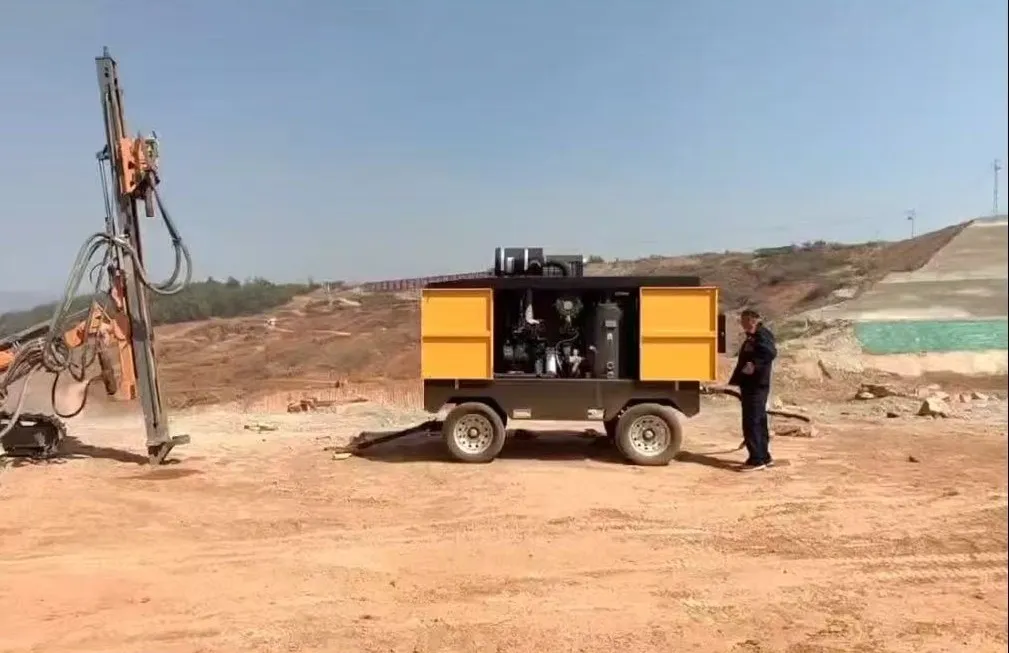
Bench blast holes — drilling speed and cost, both worked out
Bench drilling in stone and aggregate quarries is a core application worldwide; selection weighs drilling speed, rod wear and purchase cost
Help me chooseTypical challenges
01
Hammer not matched to hole size slows drilling
02
Too small an annulus gives high up-hole velocity and fast rod wear
03
Tight budgets — performance must be weighed against price
04
Rule-of-thumb selection ignores the link between rod size and air demand
What compressed air does here
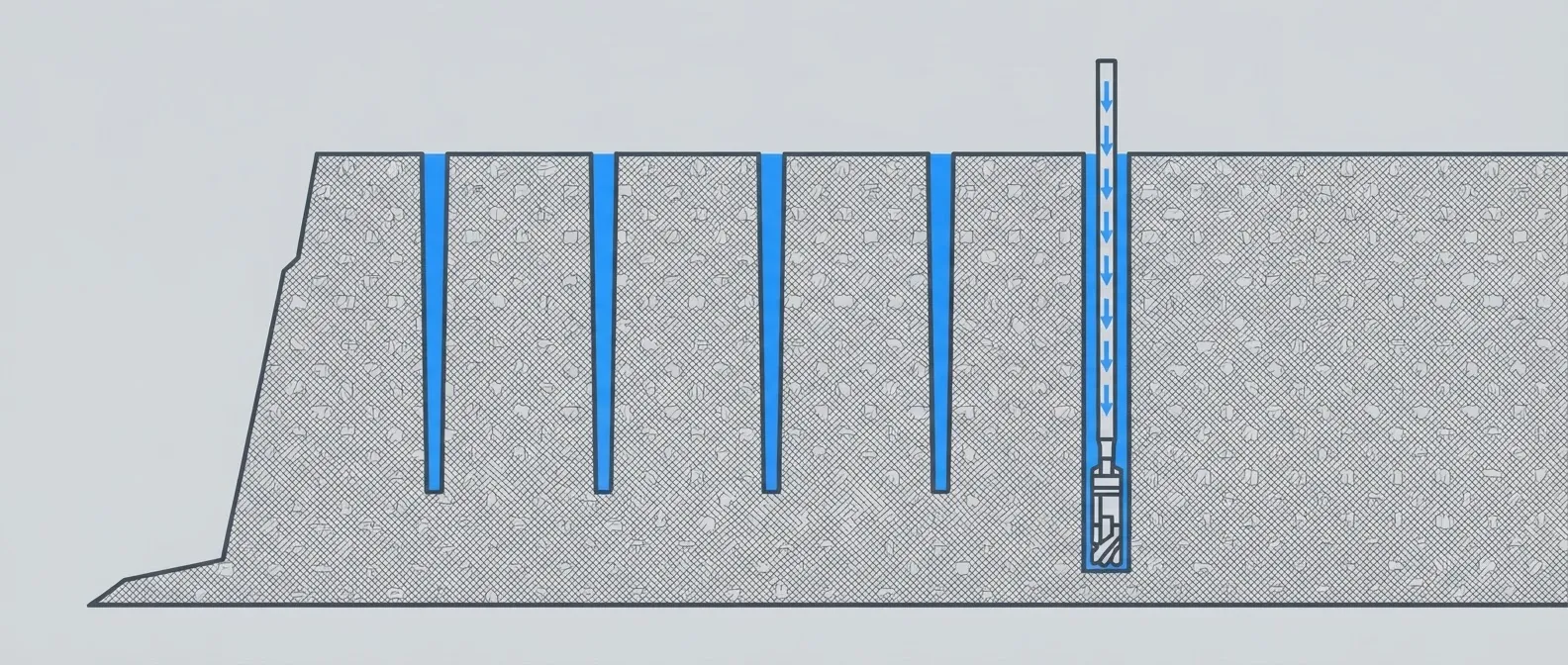
Driving the hammer
Compressed air drives the DTH hammer for bench blast holes

Clearing cuttings
Air carries cuttings up the annulus — check velocity against hole and rod size
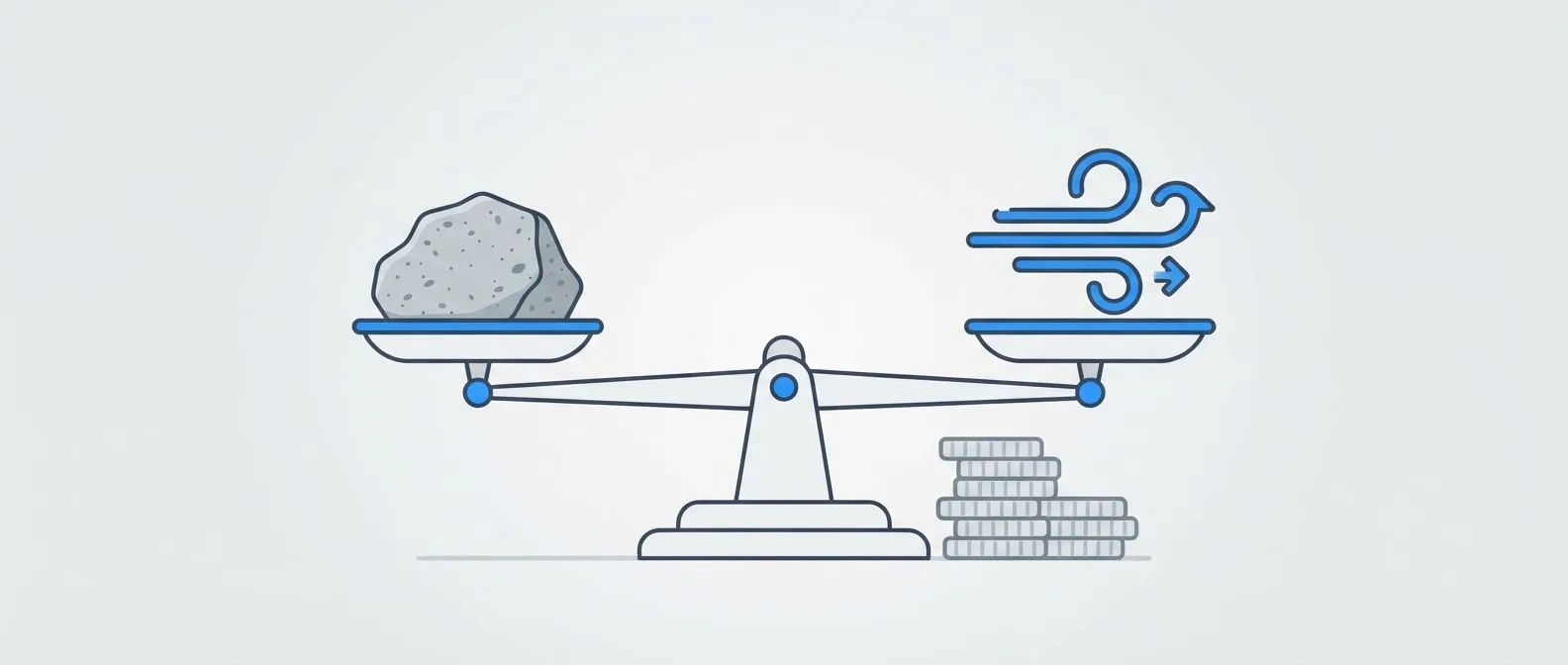
Right-sizing
Calculate air demand from real conditions and avoid paying for an oversized unit
Recommended configuration
Typical hole size / depth / duty
Around 140 mm, about 25 m deep (varies by quarry)
Recommended pressure & air delivery
Air demand from hole and hammer size — 22 m³/min @ 19 bar typical
Recommended models
- LGCY260-22/19View model ›
Results
Drilling speed back to normal and much longer rod life, at a lower purchase cost than the unit originally planned (from a granite quarry in east China)
Recommendations
- Calculate air demand from hole and hammer size and check up-hole velocity
- Match rod size to the annulus to avoid excessive velocity and wear
- The LG Series is the value choice for budget-conscious quarries with conventional duty
Quarrying — FAQ
Slow drilling — is it the compressor or the tooling?
+
Not necessarily the compressor. Rods too large for the hammer leave a small annulus and high up-hole velocity, which also slows drilling and wears rods. Check air demand and velocity first.
Is the LG Series suitable for quarries?
+
Yes. It shares the M Series' engineering standards and is optimised for purchase cost — a good fit for budget-conscious quarries with conventional duty.
Single-stage or two-stage?
+
By pressure: up to 13 bar single-stage is simpler and cheaper; from 20 bar two-stage is required; between 14 and 19 bar both exist, and two-stage saves fuel or power on long continuous duty.