
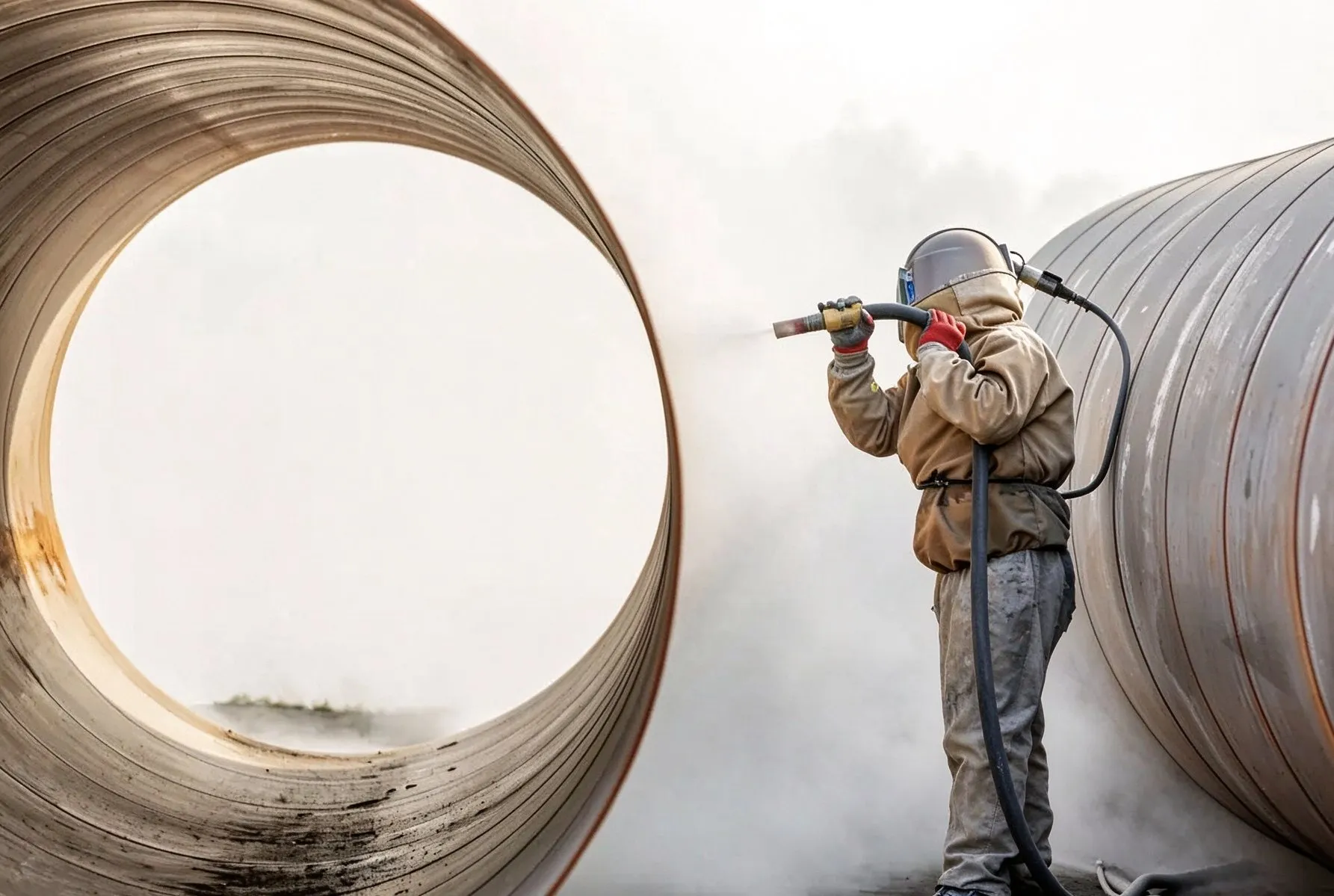
Blast nozzles never stop — neither does the air
Surface preparation of hull blocks and steel structures needs high flow for long hours; oil content and pressure stability decide the finish
Help me chooseTypical challenges
01
Several nozzles at once — too little reserve and pressure drops
02
Humid, salty coastal air demands corrosion protection
03
Long continuous blasting shifts test durability
04
Pressure swings give an uneven finish
What compressed air does here
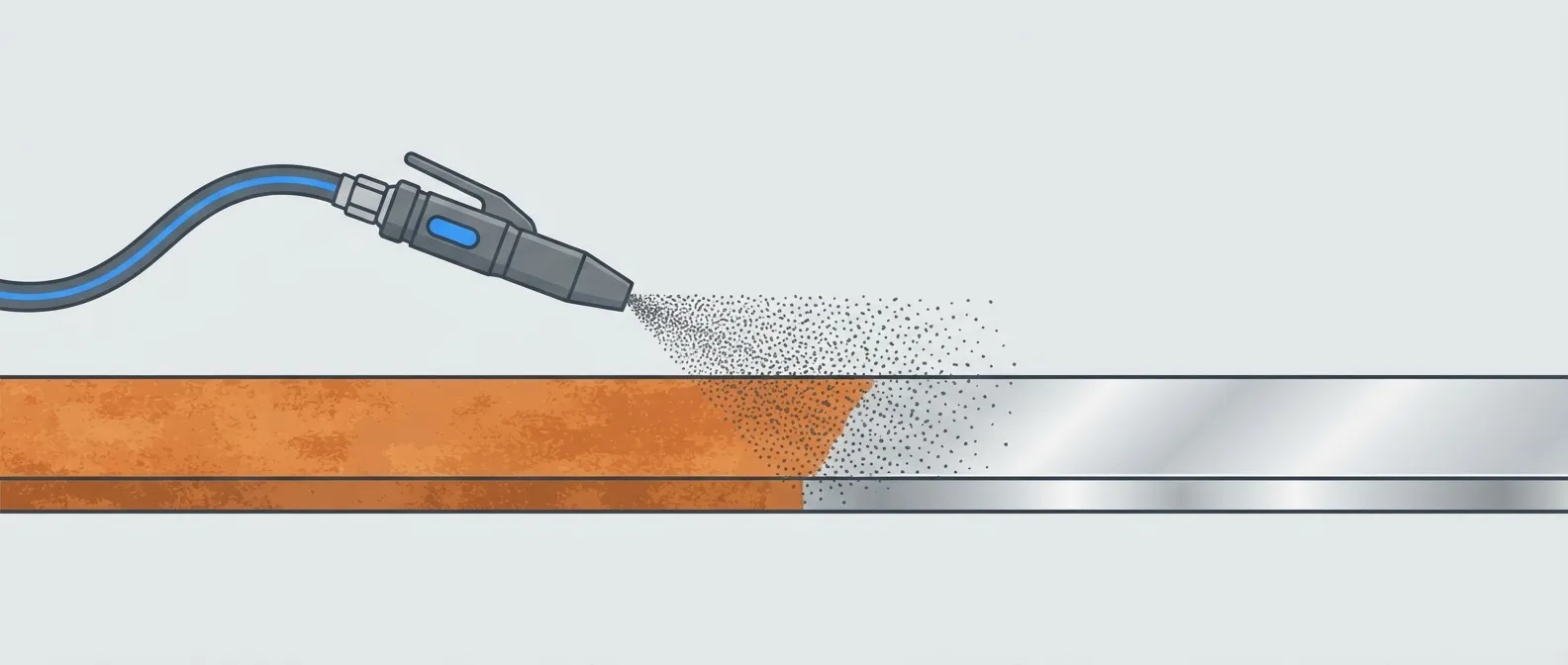
Driving the nozzles
Compressed air accelerates abrasive to strip rust and old coatings
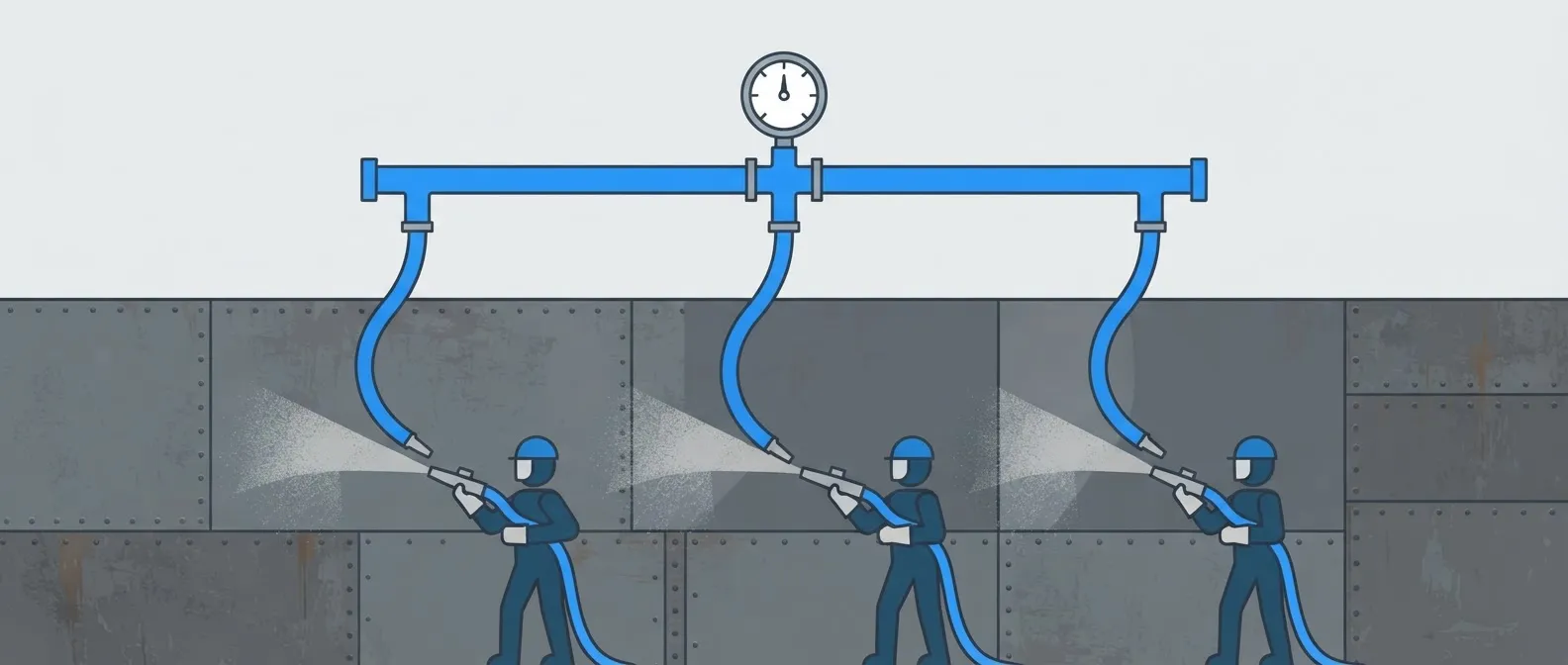
Stable pressure
With several nozzles running, pressure must stay steady for an even result

Clean air
Blasting is sensitive to oil carry-over, so filtration must be matched
Recommended configuration
Typical hole size / depth / duty
Based on number of nozzles and how many run together
Recommended pressure & air delivery
Total flow from nozzles in use plus 15–20% margin; 18–28 bar typical
Recommended models
- DM185-28/18View model ›
Results
Stable pressure with several nozzles running and a more consistent finish; much lower cost per cubic metre than the diesel solution (from a coastal shipyard project)
Recommendations
- Outdoor-grade anti-corrosion finish for humid, salty coasts
- Size total air from the number of nozzles and simultaneous use, plus margin
- Match intake filtration to the cleanliness the process needs
Sandblasting — FAQ
What air flow do I need for sandblasting?
+
Base it on the number of nozzles working at the same time and allow 15–20% extra so pressure doesn't sag.
Do units need special protection on the coast?
+
Yes — choose an outdoor-grade anti-corrosion finish and keep up regular corrosion checks.
Diesel or electric?
+
It depends on grid power. With stable power choose electric — lowest running cost and less noise. Without power, or if you move often, choose diesel.