Low air flow or high-temperature shutdown? Troubleshoot in this order
KayDrill engineering team ·
Low air flow, pressure that won't build, high-temperature alarms, oil at the air filter, an engine that won't fire — most compressor faults can be traced by users. Causes and the order to check them.
Before you pick up the phone
When a compressor misbehaves on site, the first reaction is often to call the manufacturer. Yet most faults have ordinary causes — a blocked filter, a leaking hose, dirty coolers, or the wrong way of starting and stopping. An operator who checks in order can usually find and fix these much faster than waiting for a service visit.
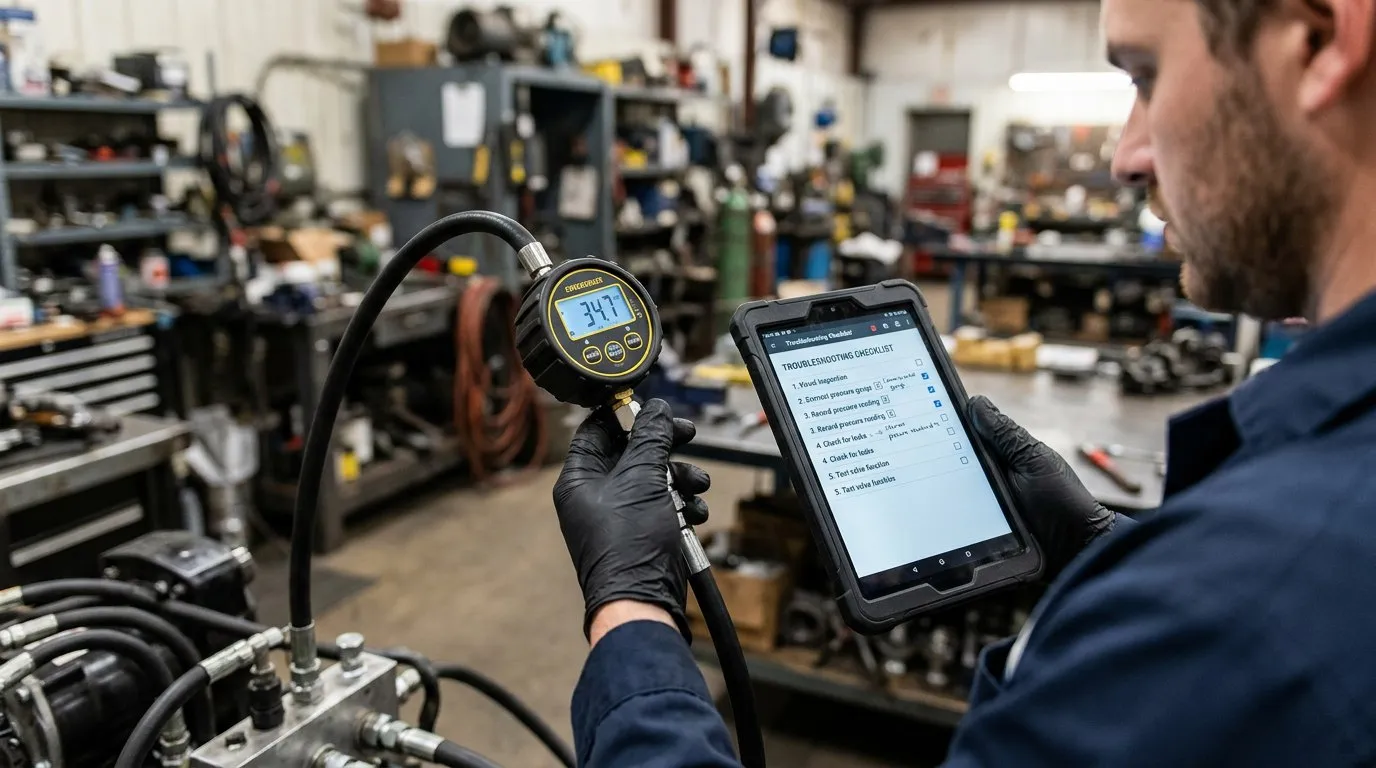
This article groups faults by symptom, explains the causes and gives an order of checks. The principle: check the easiest and most common things first, then the complicated ones.
Low air flow and pressure that won’t build
These two often appear together for similar reasons. The most overlooked is that demand simply exceeds the unit’s output — a bigger hammer, or another tool connected — with nothing wrong with the compressor. Next is leakage: air lost on the way. Only then come causes inside the compressor: a blocked air filter or separator, a regulator out of adjustment, low engine speed or an inlet valve that doesn’t open fully.
| Fault | Check in this order | If still not solved |
|---|---|---|
| Low air flow | Demand above output? → leaks in hoses and valves → blocked air filter (indicator) → blocked separator → regulator out of adjustment → low engine speed (check fuel filter) → inlet valve not fully open | Ask the manufacturer to check the airend rotors for wear |
| Low pressure | Demand too high? → blocked air filter → leaks in hoses and valves → regulator out of adjustment or damaged | The regulator is a stock part and can be replaced directly |
If pressure is too high, or the safety valve lifts, check the regulator setting, the blow-down valve, leaks in control lines and a sticking inlet valve in that order; if the unit won’t unload, check the regulator first, then the solenoid valve and wiring. These faults affect safety — if you can’t find the cause, contact the manufacturer promptly.
High-temperature alarms and overheating
Overheating is the most common summer fault, especially “it shuts down every midday”. Usually it’s cooling: poor ventilation around the unit with hot exhaust air drawn back in, a dust-clogged oil cooler, or a loose fan belt. It can also be the oil: low level, or blocked filter, thermostatic valve or return lines disturbing circulation and cooling.
Check in this order: ambient temperature and how the unit is placed — is hot air recirculating? Then the oil level in the separator tank; then clean the oil cooler and check the fan belt; finally the oil filter, thermostatic valve and oil lines. Users can deal with the first steps themselves; if the thermostatic valve and airend oil lines still don’t explain it, contact the manufacturer.
Oil at the air filter, high oil consumption
Oil at the air filter is nine times out of ten caused by stopping incorrectly. Stopping under pressure pushes oil back to the intake. Unload first and wait until pressure is below 4 bar before stopping. If stopping isn’t the issue, check the inlet-valve seal and replace the valve if necessary.
If oil consumption suddenly rises, check the two simplest things first: overfilling and too much condensate. Then check for leaks in the lubrication system, a blocked scavenge line, a damaged separator element and low system pressure.
Engine starting and running problems
Many faults on diesel units are in the engine. A good first clue is whether there is smoke from the exhaust.
| Symptom | Check in this order |
|---|---|
| Turns but won’t fire, no smoke | Fuel in the tank → blocked fuel lines → lift pump → fuel filter → injection pump |
| Hard to start, with smoke | Battery and starter → cold-start aid → fuel quality and cloud point → air filter → air in the fuel system |
| Starts, then stops | Idle too low → starting under load (always start unloaded) → fuel quality → bleed the fuel system |
| Stops suddenly under load | Fuel level → coolant temperature, level and thermostat → fan → oil pressure and oil filter → switches and wiring |
For excessive vibration, check for low engine speed, then loose pulley or damper bolts, an unbalanced fan, and loose or worn mounts.
Alarms on electric units
The control panel on electric units shows fault codes directly. Common ones are phase sequence, voltage out of range, airend overload, airend stall, low water, high discharge temperature, over-pressure, current imbalance and phase loss. A phase-sequence alarm is most likely the first time a new unit is connected; the fix is simple — switch off, swap any two supply phases, and check the rotation of the airend and fan before starting. Handle other codes using the manual supplied with the unit.
In short
Remember one principle: outside before inside, simple before complex. Check demand, hoses, filters and cooling before valves and oil lines — most problems are solved in the first few steps. If the airend, inlet valve or pressure control still don’t explain the fault, or the machine is under warranty, send us a repair request with the serial number and the symptoms, and we’ll respond promptly.

Not sure which model?
Six questions to the right model for your site
Help me choose ›FAQ
Why does my compressor shut down on high temperature every midday?
+
Most often a dirty oil cooler or hot air recirculating. Clean the cooler and turn the unit, then check the oil level and fan belt.
Air flow is slowly dropping — is the machine just getting old?
+
Usually it's a blocked air filter or separator, or a leaking hose. If all those check out, ask the manufacturer to inspect the airend rotors for wear.