Why compressors lose power at altitude — and won't start in winter
KayDrill engineering team ·
At 2,000 m a compressor delivers about 15% less air, and severe cold makes starting difficult. Here is why, and what to do when selecting and operating your unit.
Same machine, different place
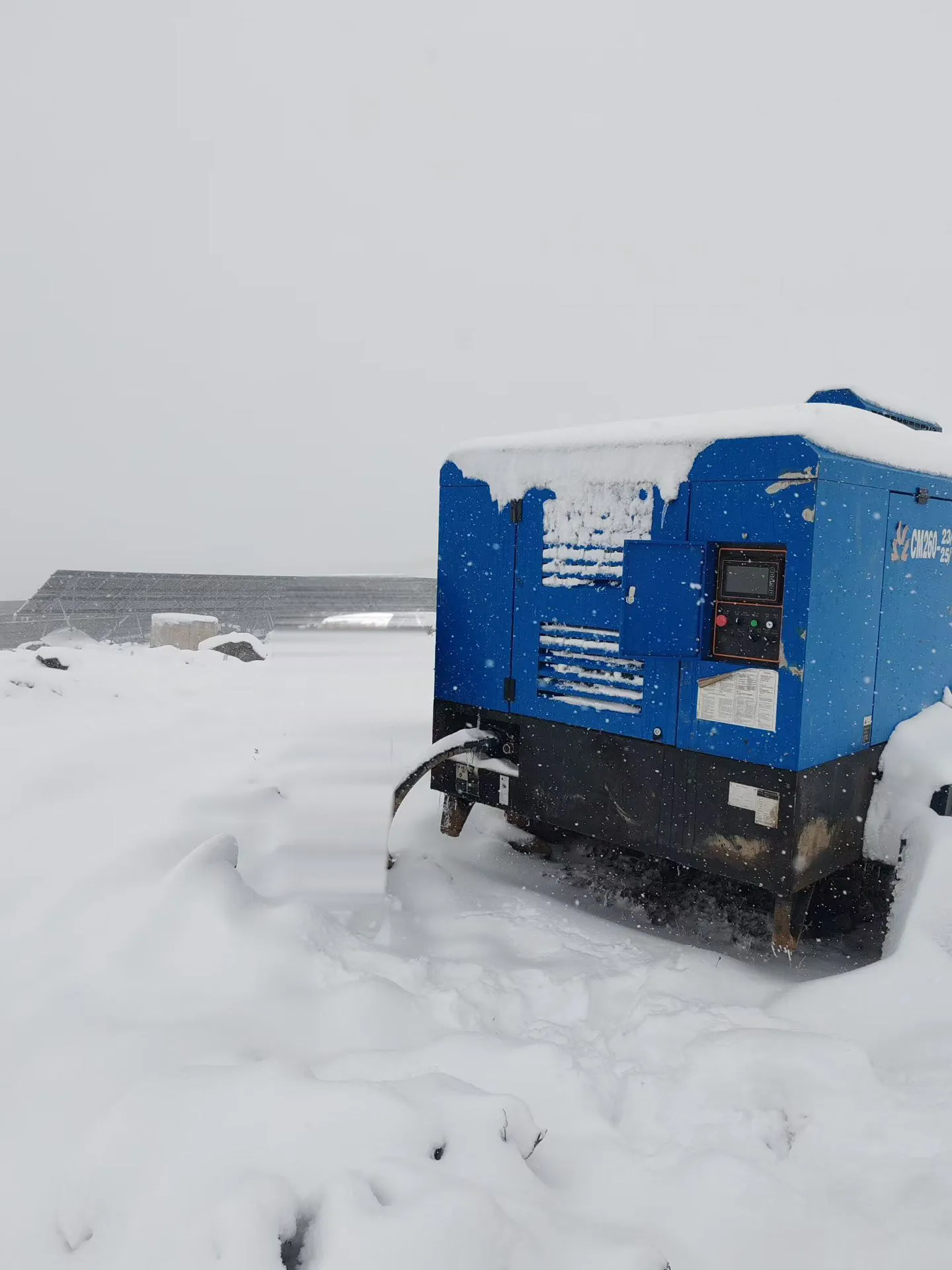
A compressor that works perfectly on the plains often feels “weak” on a site in the mountains: pressure won’t build, drilling slows and by midday it may trip on high temperature. In a northern winter the same machine has a different problem: it won’t start in the morning, and once running it needs a long warm-up before it can work.
Neither means the machine is broken — the environment has changed. At altitude the air is too thin; in severe cold the temperature is too low. The good news is that both can be dealt with at the selection stage, provided you tell your supplier the site altitude and lowest temperature when buying.
At altitude, the compressor takes in less air
A compressor draws in surrounding air and compresses it. The higher you go, the thinner the air, so each revolution takes in less and real output falls.
Published industry data show the effect becoming noticeable above about 1,500 m; at 2,000 m a compressor delivers only about 85% of its sea-level air. For drilling that means weaker flushing and slower penetration — and if the selection was tight, pressure may not build at all.
Diesel units are hit twice. Engines need oxygen to burn fuel; in thin air they lose power and run hotter. On a hot afternoon cooling can’t keep up and the over-temperature protection trips.
Four points for high-altitude projects
First, size up. Work out the air flow and pressure for sea level, then step up by the altitude correction factor — the higher the site, the bigger the step.
Second, a bigger unit alone isn’t enough. Upsizing restores air flow but not engine power or cooling. Diesel units need a high-altitude package: the KayDrill M Series offers an intake and combustion option optimised for altitude, with enlarged cooling to limit power loss and heat. High-altitude units can work at around 5,000 m.
Third, use electric if you have power. Motors don’t rely on combustion, so they don’t lose power at altitude, and there’s no diesel to haul in. On a large hydropower project in the high-altitude southwest, KayDrill DM250-31/25 and DM185 electric units were used.
Fourth, leave cooling margin. Day-night temperature swings are large at altitude and midday is the hardest time for cooling, so choose cooling for the hot condition.
In severe cold: oil, batteries and water
Low temperatures affect compressors in four ways.
Oil thickens and flows poorly, so the machine has to overcome much more resistance at start-up. Batteries lose capacity in the cold, so the engine can’t crank fast enough. Diesel also suffers: if its cloud point is above the air temperature, wax separates and blocks the fuel system. And condensate in hoses and valves can freeze.
At a large iron mine in northeast China, where winter lows approach -30 °C, both KayDrill diesel units on site were fitted with the cold-start system and pre-heater — precisely to solve the problem of not being able to start work in the morning.
Winter work: the right configuration and the right habits
For configuration, choose the cold-start system and pre-heater for severe cold; they shorten the time from start to full duty and reduce cold wear. Choose coolant for the lowest local temperature and check it again before storage.
For habits, use proper winter diesel with a cloud point below the ambient temperature. Use only the specified compressor oil and never mix brands. If an electric unit is hard to start in winter, jog it with the start button for about two seconds, hit the emergency stop, let the pressure vent, then start normally so the oil gets moving. Drain condensate regularly to prevent freezing and oil emulsification.
Don’t forget heat and dust
Besides altitude and cold, heat and dust are common harsh conditions. In hot regions keep the area around the unit ventilated so hot exhaust air isn’t drawn back in, and clean the coolers often. In deserts, gravel plains and open-pit mines, fit the heavy-duty desert air-filter kit to extend filter life and protect the airend.
In short
Altitude starves a compressor of air and cold stops it starting — both have proven solutions, as long as the conditions are clear before you buy. If your site is at altitude, in severe cold, in high heat or in heavy dust, tell us the altitude and the lowest and highest temperatures when you enquire, and our engineers will recommend the model and options for your actual conditions.

Not sure which model?
Six questions to the right model for your site
Help me choose ›FAQ
Can a standard compressor be used above 3,000 m?
+
It will start, but air flow and pressure will fall short. Choose a high-altitude configuration and size the air flow up for the altitude.
Do high-altitude or cold-start packages take longer to deliver?
+
Yes. These options need extra production time — please confirm delivery with our sales team.